

Introduction
Conversion Rate Optimization (CRO) has come a long way from basic A/B testing and static landing page tweaks. Today, CRO is deeply rooted in data science, behavioral science, and predictive algorithmic work. As companies begin to farm more first-party data and deploy AI tools, the CRO focus has moved to hyper-personalized user experiences that are able to adapt in real time. The way CRO has evolved speaks to a greater truth: optimization that really works does not focus on minor changes, but instead is a strategic shift across the whole customer journey.
The year 2025 marks another significant inflection point. Digital touchpoints have multiplied, and consumer expectations have soared; meanwhile, CRO strategies must keep pace with the rapid advancement of martech, privacy regulation, and buyer sophistication. Users demand, at the same time, relevance, speed, and trust. AI-driven experiences and automation have thus created opportunities and blind spots alike. The digital ecosystem is no longer just complex; it's competitive, dynamic, and without adapting, businesses run the risk of being left far behind by those who can customize their offers faster.
This blog will act as your survival guide. It will delve into some of the major CRO mistakes marketers and growth teams are making or will likely make in the course of 2025 onwards. We will touch on everything that could go wrong, from misreading intent data to pitfalls of over-personalization, but more importantly, what to do about it. Whether you are a veteran in CRO or are laying your very first optimization roadmap, this will provide valuable lessons for making smarter, faster, and conversion-driven choices. Let’s dive into the world of common mistakes you should avoid in 2025.
Failing to Personalize the Customer Journey
One of the most long-standing CRO mistakes continuing into 2025 is treating all visitors the same. Generic, one-size-fits-all landing pages worked a decade ago, but they actively harm engagement and conversion rates these days. Customers are no longer passive; they expect every single touchpoint to reflect their needs and behaviors, if not at least their context. Not meeting these expectations leads to disjointed experiences that result in higher bounce rates and stalling buyer journeys. In fact, a McKinsey study found that 71% of consumers expect companies to personalize interactions, while 76% get frustrated when they do not receive such treatment. As personalization becomes a baseline expectation rather than a differentiator, companies that fail to evolve will quickly find their CRO efforts falling flat.
For this reason, it is important that CRO professionals move beyond developing just surface segmentation and set up adaptive, data-supported personalization workflows. Instead of relying on mere static personas or assumptions, organizations must transform their first-party data and behavioral insights, combined with their dynamic information, into experiences that feel more intuitive and relevant. Here's how to get it started:
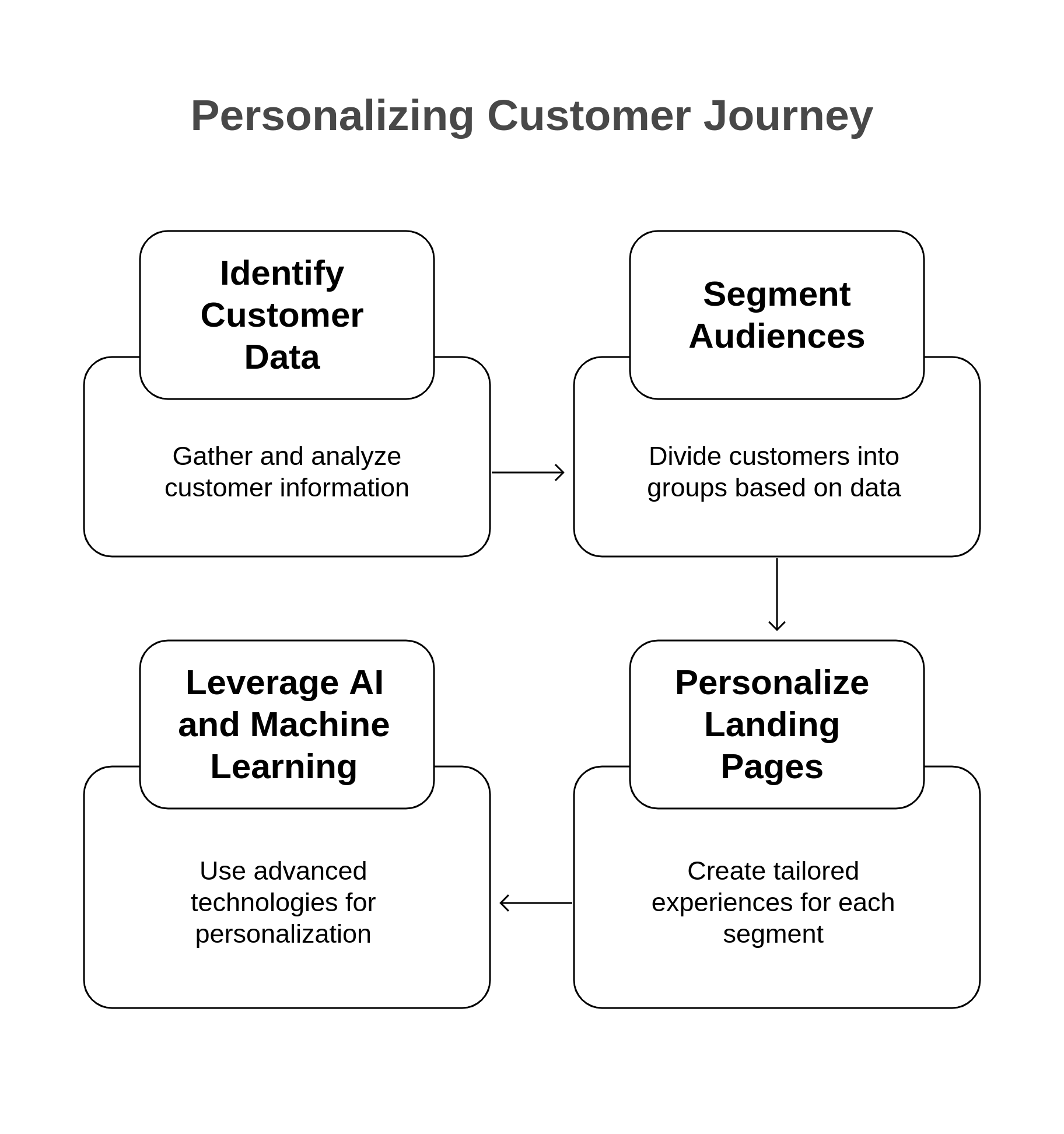
Drive personalization at scale using AI and machine learning. These tools can analyze behavior patterns and automatically adjust content or offers in real time.
Behavioral signals mean segmenting users according to buying intent. Go past the basics of demographics, focusing instead on page interactions, time spent, and content consumption.
Dynamic landing pages: use personalization platforms to swap headlines, images, and CTAs according to who the visitor is and based on what they care about.
Proceed with continuous personalization experiments. Test different variables (copy, layout, timing) for different audience segments to figure out what drives conversions.
In 2025, personalized experiences are not optional; they are the foundation of any competitive CRO. After all, the more context-aware your customer journey becomes, the more frictionless the conversion will be.
Ignoring Mobile Optimization
For most CRO teams, the most common yet most costly error is in the management of desktop experiences, whilst treating mobile optimization as an afterthought. In 2025, this error turns out to be a very damaging reality, as by now, mobile has secured quite a place for itself in the pattern of user behavior across industries. According to Statista, in 2024, mobile devices accounted for 62.54% of the total traffic going to worldwide websites ever-increasing percentage. A poorly designed mobile journey creates opportunity costs in friction points at which users get stuck: cumbersome navigation, long load times, and layouts skewed in a way that annoys users and makes them leave. In most cases, this mobile experience would constitute the first and only point of contact a visitor would have with your brand, and if it performs poorly, so will your conversions.
To fix this, you need to have a mobile-first mindset across each and every layer of your CRO strategy; it can't be bolted on at the end as an afterthought to the rest of the site. Your design, UX, and performance priorities should all be based on mobile behavior patterns.
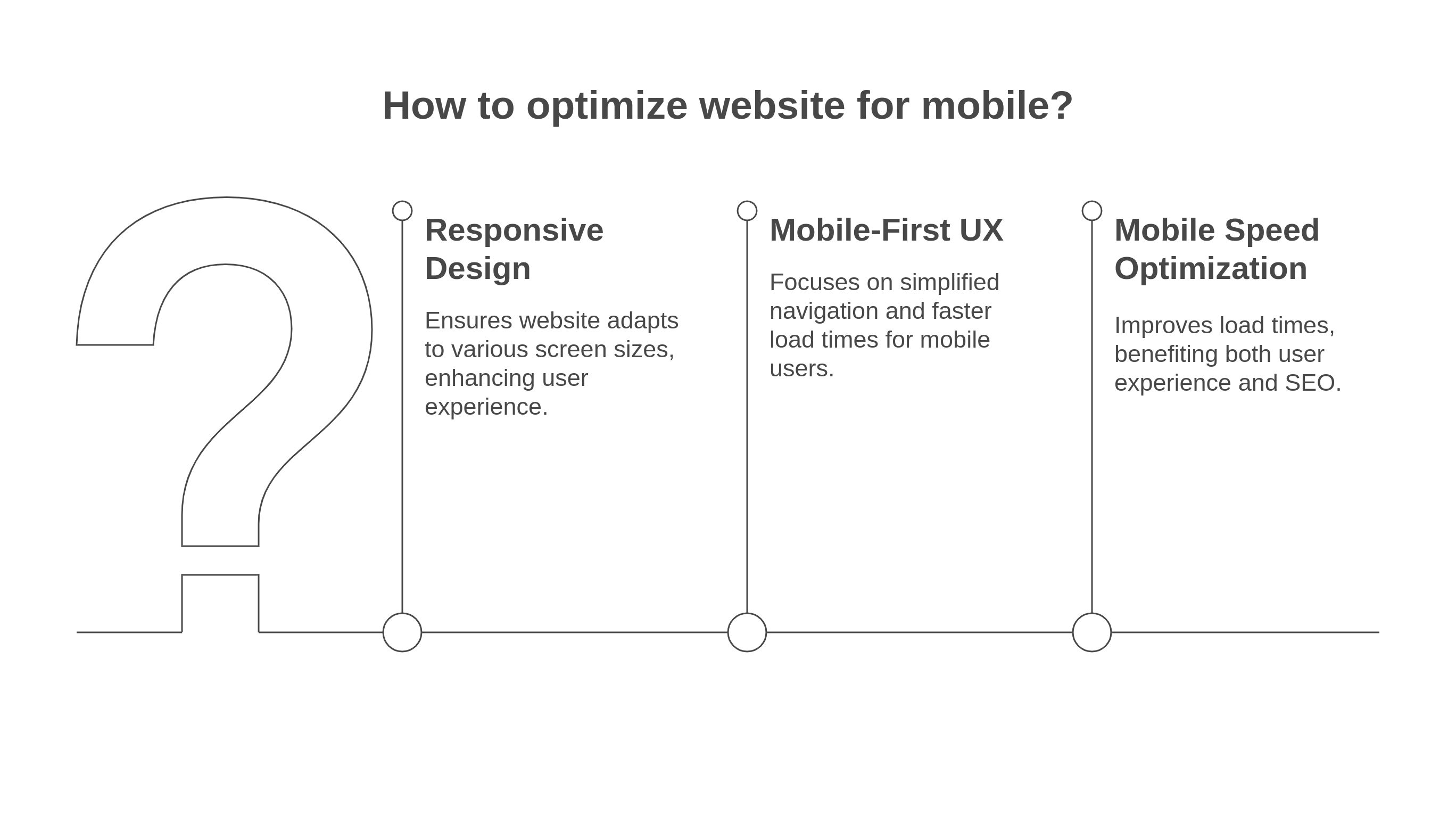
Reach proper cross-device designs. Test across all devices and thoroughly across a range of screen formats to catch issues that might have slipped through a rigorous desktop QA.
Apply mobile-first UX principles such as minimalist designs, thumb-friendly navigation, short copy, and visible CTAs above the fold.
Prioritize mobile speed optimization. Optimize image size, remove render-blocking scripts, and rely on lazy load to boost time to interactive.
Real-world mobile data. Google Lighthouse, PageSpeed Insights, or even Hotjar's awesome mobile recording will surface much hidden friction within the funnel.
Mobile is no longer just a digital channel, it has become the primary mode of digital engagement. Now, mobile performance must be viewed not just from a technical perspective but from a strategic growth lever for CRO teams.
Unsatisfactory A/B Testing
A/B testing is the most quintessential CRO project. It requires appropriate application, with the option of underapplication, in several organizations. In 2025, the main problem is that most decision-making is based on instinct, aesthetics, or the internal preferences of stakeholders instead of user data. Habituated marketers, too, may suffer from confirmation bias and go with what feels good instead of what performs better. This wasted budgets, inconsistent outputs, and missed opportunities for optimization. What you assumed might work may not resonate with users at all. In fact, studies have proved that if A/B testing is disciplined and strategically implemented, it can boost 30-40% lead generation in B2B websites and 20-25% for e-commerce websites.
To derive the maximum benefit from A/B testing, teams must view it as a structured, ongoing exercise rather than an isolated experiment or a checkbox exercise. It should be at the heart of every part of the customer experience that you evaluate, iterate, and validate.
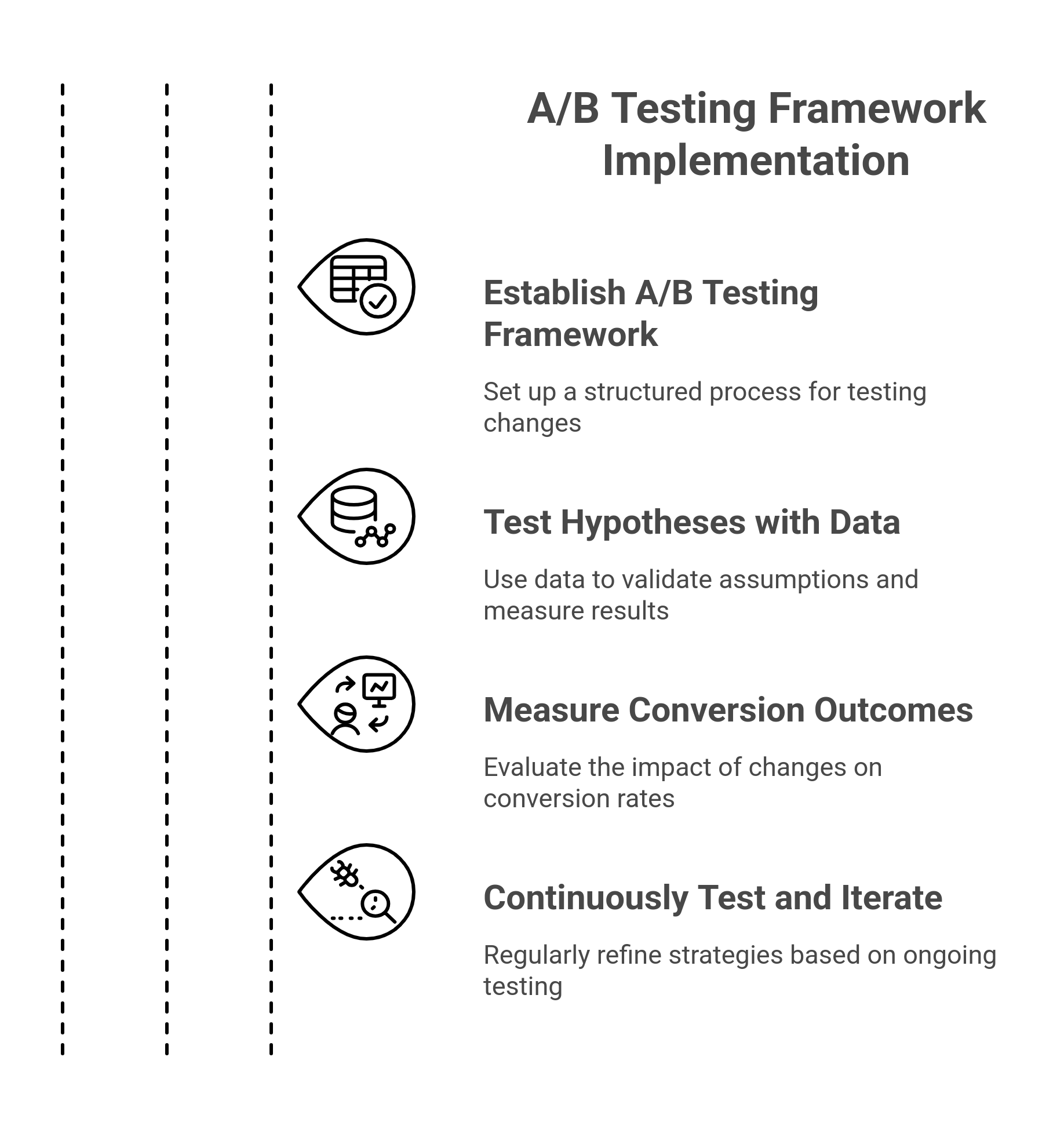
Establish a firm framework for A/B testing. The cycle involves formulating clear hypotheses, identifying control and variant elements, and setting measurable KPIs for each test.
Make decisions based on data. Test one change at a time to isolate impact and evaluate results using statistical significance, not gut feeling.
Concentrate on areas of high impact with high traffic. Start with landing pages, pricing pages, and lead the sorts of places where even tiny improvements can yield very large gains.
Don't forget that this is a continuous testing mindset. Winning variations can still be tested for further optimization. Continue to iterate based on user behaviors, trends, and new learnings.
Great A/B testing is less about the big score and more about delivering a trusted, repeatable engine for conversion uplift. When done well, A/B testing will become your biggest ally in eliminating guesswork and lifting performance for any CRO program.
Overlooking the Benefits of Social Proof in the 2025 CRO Strategy
This and all other social proof tools are the most undervalued levers of modern CRO. Many marketers still see them as optional supplement website content rather than strategic assets. In that sense, 2025 has its currency in trust-and-the the currency of trust is social proof. Evidence, such as peer reviews, testimonials, certifications, and case studies, has been an added impetus to bring conversions, especially during high-friction periods in the funnel. Such evidence, which remained powerful among consumers down through the years, is no longer viewed the same way. According to BrightLocal, 79% of consumers once trusted online reviews as well as personal recommendations, but now only 42% have that faith in 2025. This suggests a more skeptical audience that examines the context and credibility of reviews instead of merely accepting them. Those who prove unable to adapt will encounter limiting effects on assertiveness during important decision junctures.
CRO now holds a penny in the value of social proof with regard to that. Here’s how to put that into action:
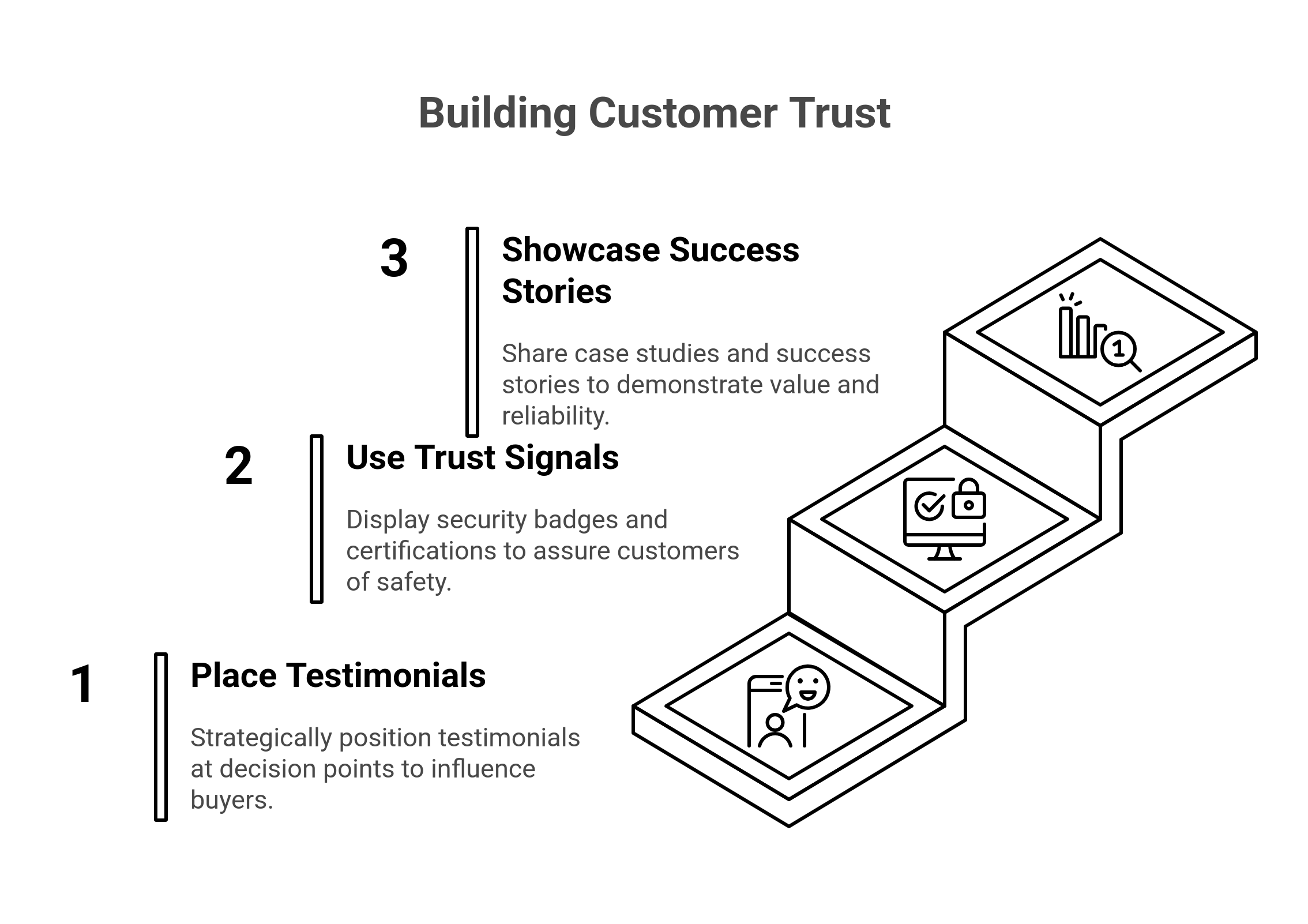
Add testimonials to critical conversion touchpoints. Let authentic voice reach potential customers on product pages, checkout flows, demo request forms, or pricing pages, areas where hesitations about purchases strike at their peaks.
Trust signals beyond reviews should be used. Add security badges, certifications, media logos, or a user count ("Trusted by 10,000+ teams") for rapid legitimacy validation.
Build case studies for your particular ICP. Results of clients that resemble your audience's industry, size, or challenges can be highlighted.
Integrate user-generated content (UGC). Authentic visuals, short videos, and quotes with real users from social media channels can add a tangible value or real-world credibility to a brand.
In 2025, it would not be about the volume of social proof, it would hinge on precision, placement, and believability. This is why carefully weaving it into the user journey creates the potential to turn skepticism into assurance and browsers into buyers.
Neglecting Trust and Security
Trust has indeed become an important element of conversion requirement and is no longer a brand value. But as emotional calculus is still ignored in CRO strategies in 2025, customers will have concerns when it comes to giving away data or transactions. The presence of data privacy issues and cybersecurity threats occupies consumers' minds whenever they are about to purchase a product, make to demo request, or gated-content forms. If the site does not make it really clear about its commitment to security, there creeps hesitation, and ultimately, conversions decline. McKinsey states that 87% of consumers would shun a business with the company if they suspected that security may pose a concern. What a number! It just shows how easily an absence of visible trust signals may ruin the other things you did in terms of CRO.
Make trust and security visible, not operational. It goes both for the back and the front. Here’s how you can do it:
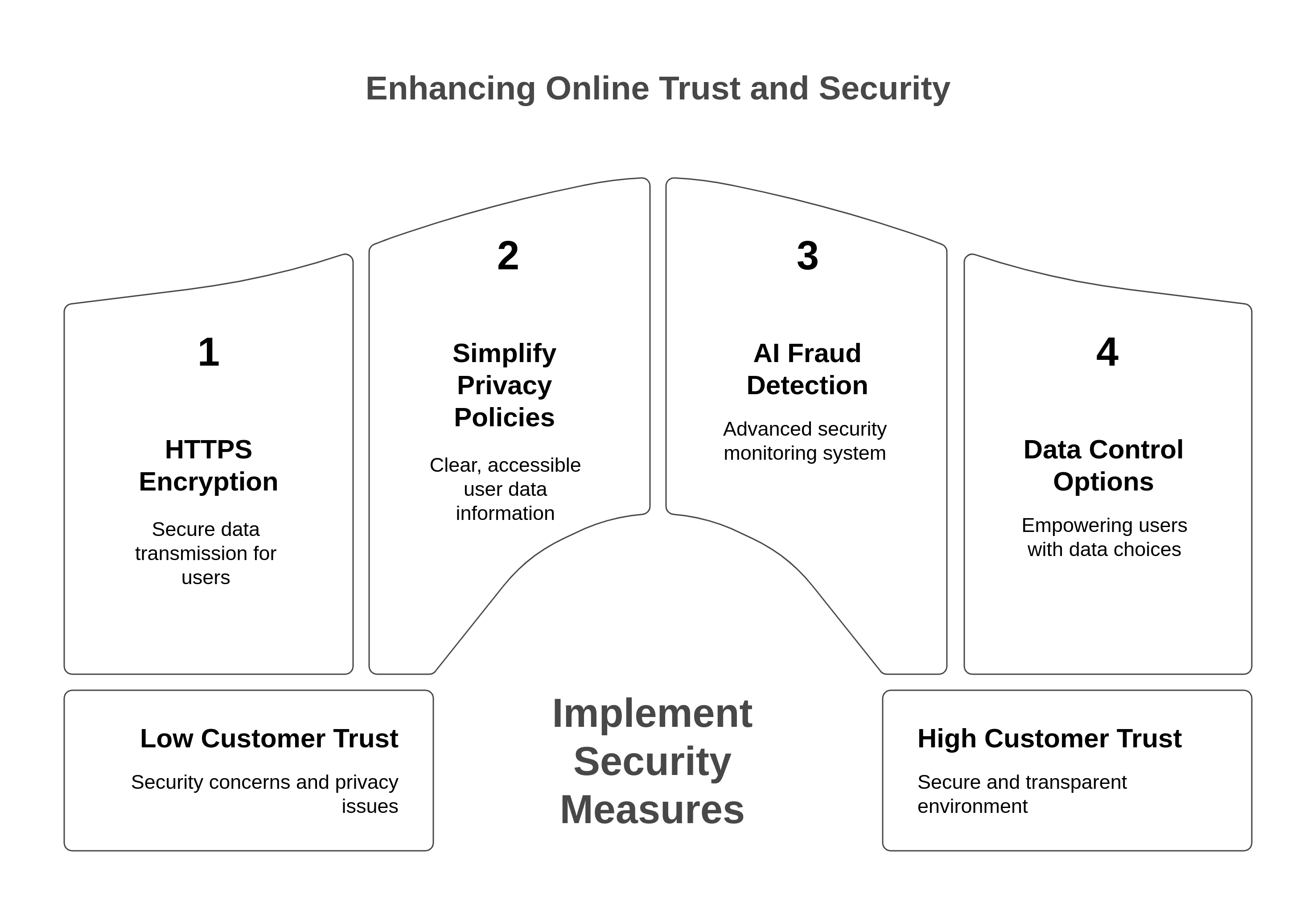
Get HTTPS on your whole site—not just on checkout or login pages—and make trust seals easy to find next to forms and CTAs.
Place security seals and privacy guarantees right at the point of conversion, especially on lead generation forms and payment gateways.
Make your privacy policy simple and human. No legal jargon; just a simple, clear, navigable page telling users exactly what happens with their data.
Move to AI-powered fraud and threat detection systems for real-time protection for your site and assurance to users that someone is watching.
Give users control over their data. Let visitors manage cookie settings and opt into communication preferences while they know what will be collected and why.
CRO now is more than making a site user-friendly; it is also making it feel safer when engaging with other people. Conversions are held at usability but glued with trust in 2025.
Speed Fails to Optimize
Speed is not simply a technical issue; it is a conversion killer. Yet, even in 2025, many websites are slower to load because of overly bloated code, oversized assets, and wrong choices of infrastructure. In a mobile context, this becomes even worse, as users are the least patient and expect instant responses. A lag of just a second may well be the difference between a bounce and a buy. Google further says that a delay of just one second can lead to a 7% decrease in conversion. For a conversion rate optimization expert, this is a major opportunity lost, which, by all means, is avoidable. No matter how effective your messaging is or how perfectly fitting your design is, if your page loading speed does not allow users to feast their eyes well upon it, they are just going to vanish in thin air.
Consider fixing this by taking speed as a fundamental consideration in your CRO strategy: not a one-off technical audit. Speed requires continuous optimization and active monitoring across devices and geographies. Here are a few suggestions to turn speed into a competitive advantage:

Optimizations of all images, scripts, and external resources. Compress image files, remove unused CSS and JavaScript, defer any non-critical scripts, etc.
Content delivery network (CDN) implementation. Geographically distributing your content would reduce latency and serve content closer to the end user.
Reduce server response times. Upgrade to faster hosting environments and leverage your back-end architecture to cut back on time to first byte (TTFB).
Continual monitoring of site speed. Tools such as Google PageSpeed Insights, Lighthouse, and WebPageTest can help find slowdowns and create a performance history.
Lazily load below-the-fold items, thus allowing the pages to look as though they load faster and create an impression of speed for the user.
A fast site is not just about good user experience; it's about accelerating conversion. In 2025, site speed will no longer as a technical "nice to have"; it is a direct channel to maximize revenue performance.
Ignoring behavioral insights
By 2025, not paying attention to behavioral data is tantamount to optimizing in the dark. Yet many teams continue to overlook-or rather underuse-this very important element of CRO, instead opting for the static assumptions about the preferences on the part of users. What results is misaligned messaging and irrelevant CTAs that poorly timed offers to tank engagement. Conversions happen when the right message meets the right opportunity, and that opportunity cannot be achieved without addressing the way visitors are interacting with your site. If you're not recording behavior such as scroll depth, click paths, rage stories, or exit intent, you're missing out on why the bounce happened, and not just what really happened. Behavioral insights state the bridge from what users are doing to what they think they are doing. A CRO means to marry the behavioral intent to adjust the user journey in real time, far from the scope of conventional analytics.
Here’s how you can fix this:
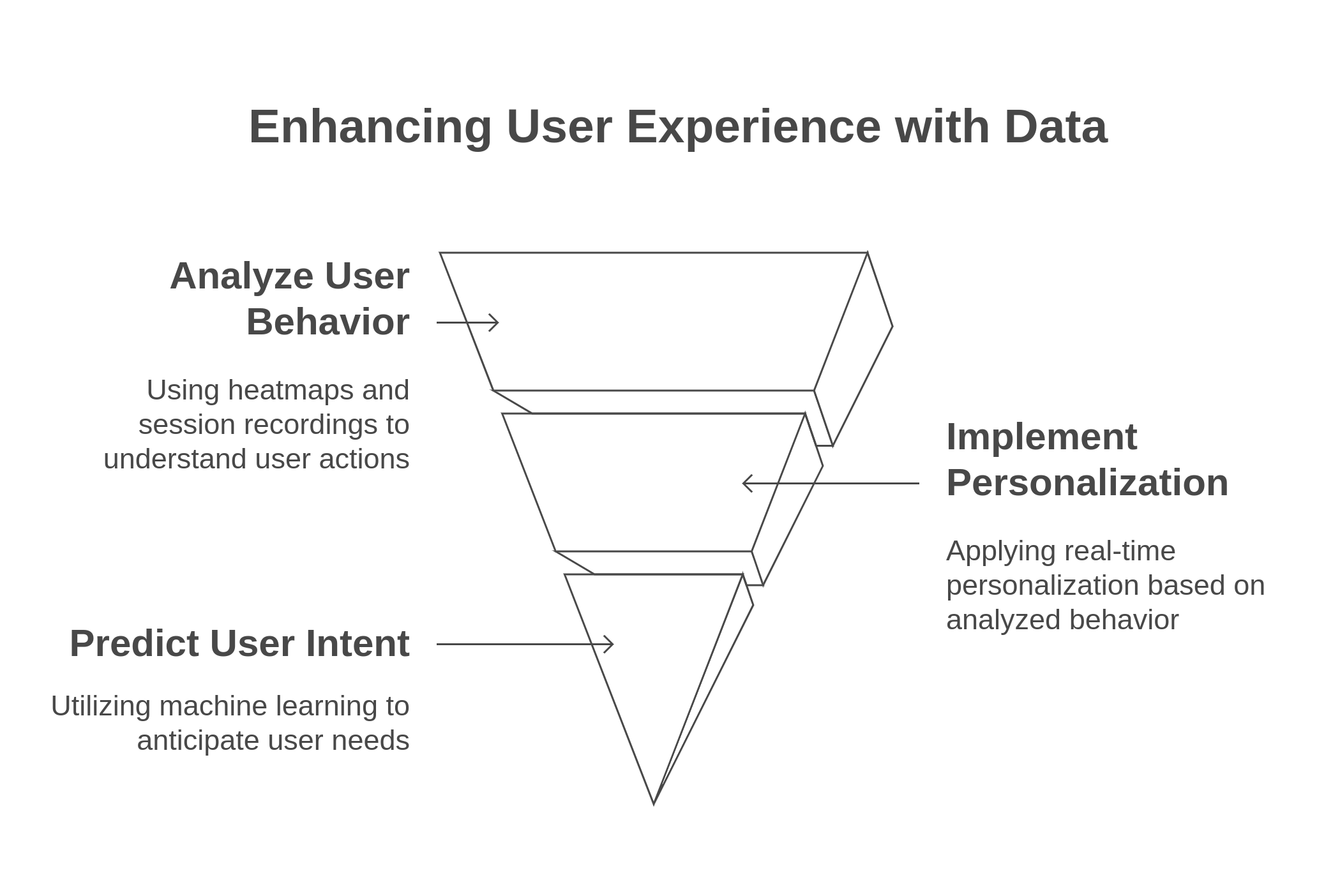
Make use of heatmaps, scroll maps, and session recordings to visualize how users navigate through important pages; what catches their attention, where they hesitate, and where they abandon.
Utilize behavioral analytical tools such as Hotjar, Smartlook, or Microsoft Clarity to collate qualitative data and identify usability issues that the numbers alone fail to reveal.
Real-time personalization engines must be set up. Trigger personalized CTAs, product recommendations, or content modules based on user actions like time on-site, previous visits, or cart activity.
Machine learning for intent prediction. Feed behavioral signals into algorithms to assess when a visitor is on the verge of converting-and what friction may be holding them back.
A/B testing for changes driven by behavior. Validate which behavioral interventions (exit-intent popups or chat prompts) really work to improve outcomes across audience segments.
Poorly Designed Call-to-Action (CTA) Buttons
In conversion optimization, small details make big differences. And few elements would seem more significant than the humble CTA button. Many businesses, however, still consider CTAs to be an afterthought, with generic copy like "Submit" or buttons buried below the fold. The result? Missed opportunities and confused users. A poorly designed CTA disrupts the decision journey—it causes hesitation, friction, or even complete abandonment. Whether it is hard to find, uninspiring to click, or poorly placed within the flow of the page, your CTA can either make or break a conversion. Research backs this up: studies show that merely changing the CTA button color can increase conversion rates by up to 21%, which illustrates how design subtleties affect behavior and outcomes.
Fixing this issue begins with thinking of your CTA as a strategic focal point-not just a purely functional element. Here is how to optimize it effectively:
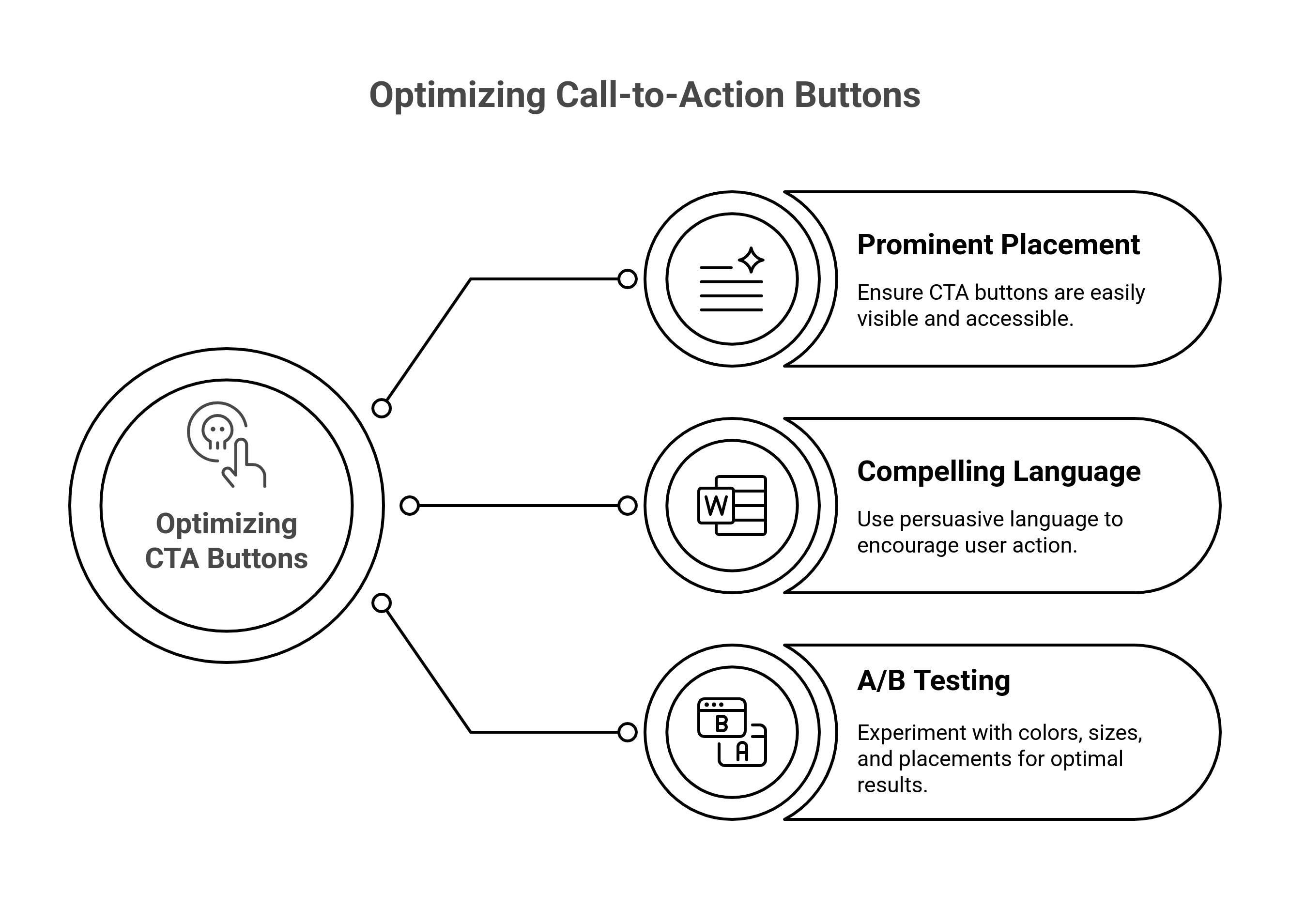
Make it visually stand out. Use high-contrast colors that grab attention while maintaining brand harmony. Ensure the button is large enough to be seen but not overwhelming.
Use clear, compelling, action-oriented copy. Instead of vague terms like “Click here” or “Submit,” rephrase with a compelling value-oriented call to action, such as “Get My Free Demo” or “Start Saving Now.”
Place CTAs where decision intent peaks. Whether it is above the fold, after key benefits, or alongside testimonials, the moment of truth is when users are really ready to act, to have the offers aligned with that intent.
A/B test design variables. Colors, sizes, fonts, icons, hover effects, and button shapes would be different when tested against user segments to discover the most effective units.
Use directional cues or the void. Influence the eye toward the CTA using the layout's flow, arrows, images, or strategic spacing that draws people's focus but doesn't clutter the page.
In 2025, the CTA button is more than just a clickable box, it is the handshake, the elevator pitch, and the close all in one. When designed with intention, it can quietly but powerfully drive your conversions forward.
Lack of Clear Value Proposition
If your value proposition is talking, it is talking to a visitor for the first time and answering an all-time burning question: "Why should I care?" Yet here in 2025, companies still prefer to bury their value under jargon, fluff, or boring headlines. A no-brainer or a poorly done value proposition creates a muddled environment of confusion and hesitation, causing users to bounce away rather than convert into clients. The stats back this up: 53% of customers say they'd abandon their online purchase if their questions aren't answered almost instantaneously, and 73% consider valuing their time to be the paramount feature of good service. In other words, clarity and speed are the name of the game.
Your value proposition must be the sharpest, most persuasive thing on the page—especially somewhere above the fold. Here's how to get it done:
Bring forward key benefits. Don't start with the features—lead with the results. What pain do you alleviate? What benefit do you provide? Make it clear in a matter of seconds.
Use language that is brief, powerful, and specific. Don't get into vague buzzwords here. For example, instead of using "We optimize workflows," one could use "Cut project delivery time by 40% with AI-driven automation."
Use formatting to your advantage. Break value into digestible bites: a strong headline, an explanatory subhead, and a brief list of differentiators.
A/B test headline variants. From emotional levers (for example, fear of missing out or relief from pain) to benefit statements or even value props quoted from customers, test them all.
Match value to intent. Adapt your value proposition depending on where the visitor is in the funnel; different messaging will work for awareness-stage users compared with those closer to conversion.
Pages convert because they are not just great-looking but speak immediately and directly to a need. If users cannot immediately see what's in it for them, they will not stick around to find out.
Conclusion
As we navigate through this current fast-flowing digital river, where everything is bound to keep changing, one truth remains evident: conversion rate optimization now is no longer about slight modifications; it's really a change of strategy. These mistakes we have observed are not mere lapses; they are impenetrable barriers between businesses and unrealized revenue. With the revealing of a distinct lack of personalization in experiences, ignoring behavioral insights, and undermining speed and trust, we have identified the serious mistakes that cost companies much more than conversion payments; they damage customer trust and competitive advantage.
Good news: Each of these can be fixed by the right attitude and the right toolbox. Leveraging AI-enabled personalization technologies, employing mobile-first designs, adopting behavioral data, and continuous experimentation will help marketers develop from friction to flow, from hesitance to action, at least in conversion rate optimization for the year 2025. It combines the mind of a psychologist with technology and agility. CRO goes against the build-it-and-they-will-come mentality, which has sundered proper customer experience in the digital space. If there is one important takeaway, it is this: Success for CRO in 2025 is not just streamlined mistake minimizing, but it's also prescriptive to crafting. The brands likely to survive in this demanding market will shape themselves not by considering CRO as a mere checklist but as a culture. The moment to evolve is now.


