

The Crossroads of A/B Testing and Personalization
A/B testing is the unsung hero of successful personalization strategies. In a world where 80 pecent of consumers are more likely to purchase from brands offering personalized experiences, the ability to test and validate these personalization efforts isn't just nice to have—it's essential. Think of A/B testing as your GPS in the vast landscape of personalization possibilities, helping you navigate from "we think this works" to "we know this works." Businesses can move beyond assumptions and into the realm of proven results. This systematic approach ensures that personalization decisions are based on actual user behavior rather than speculation. It's about creating experiences that don't just feel personal but actually deliver measurable improvements in user engagement and satisfaction.
This blog explores how A/B testing transforms user experience personalization. From validating assumptions to delivering measurable impact, we’ll uncover why this practice is indispensable for businesses aiming to create data-driven personalization at scale.
The Role of A/B Testing in Defining Personalization Strategies
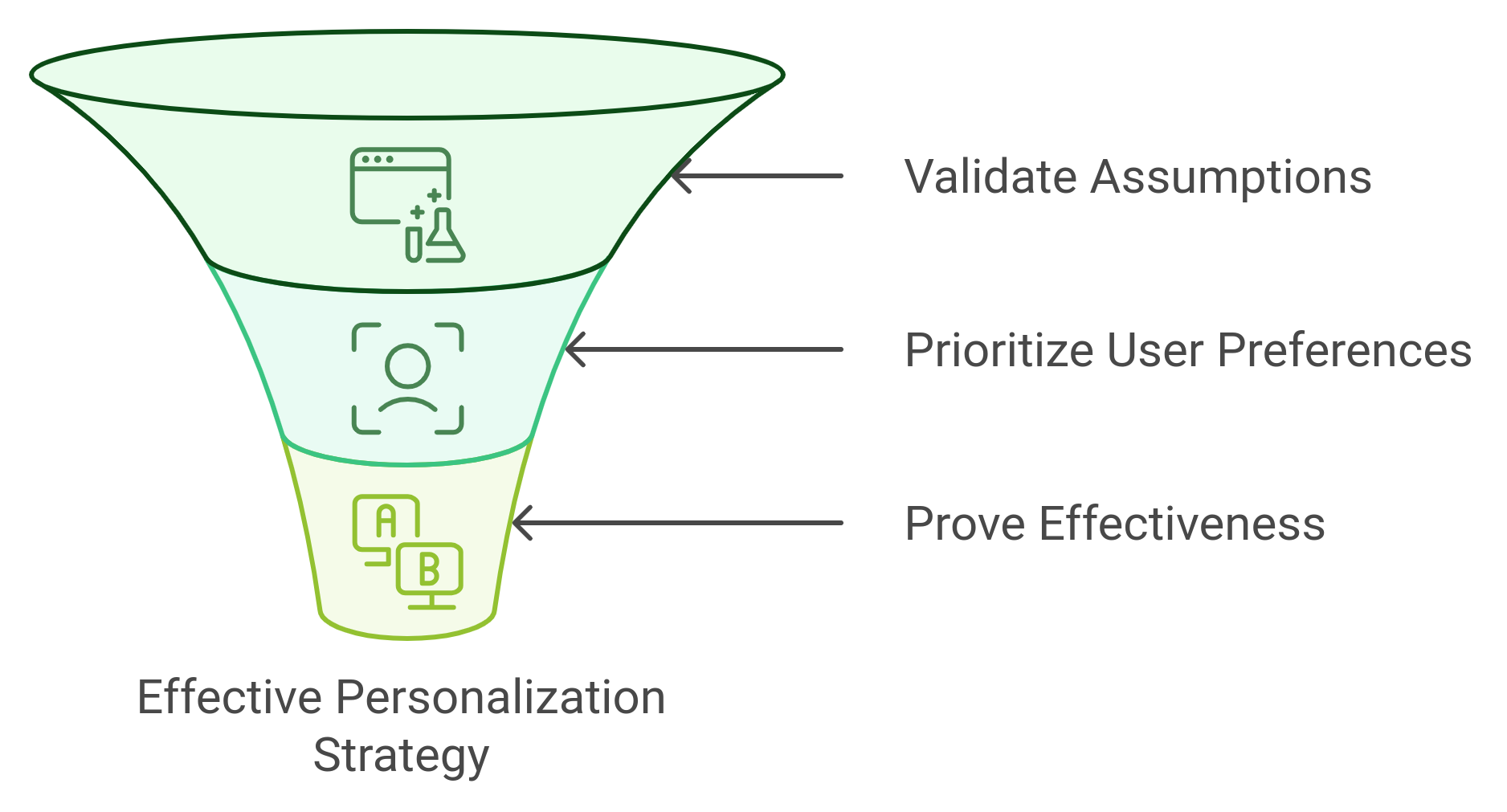
Personalization often begins with hypotheses: “Would this headline capture attention?” or “Do younger users prefer minimalist designs?” But without validation, even the most well-intentioned changes can backfire. This is where A/B testing steps in as a reality check, ensuring that personalization strategies are grounded in actual user preferences rather than assumptions.
Validating Assumptions with A/B Testing
Every user is unique, but guessing what resonates most can lead to wasted effort. A/B testing helps validate assumptions by dividing users into groups, exposing them to different experiences, and measuring the results. For example, testing two variations of a product recommendation algorithm can reveal which one drives higher conversions—helping businesses fine-tune their data-driven personalization.
Prioritizing User Preferences Across Segments
Not all users interact with digital platforms in the same way. Some segments might prioritize speed, while others value visual appeal or detailed information. A/B testing uncovers these nuanced preferences, allowing businesses to craft tailored experiences. Imagine testing email subject lines targeted at different age groups; the data can inform broader personalization strategies that cater to diverse demographics.
The Science of Personalization: Data Over Gut Feel
At its core, personalization should be an evidence-based process. A/B testing introduces scientific rigor into decision-making, enabling businesses to identify what works versus what feels right. Instead of assuming that a personalized call-to-action boosts clicks, a controlled test proves—or disproves—its impact. This eliminates bias and empowers teams to deliver meaningful and measurable personalization.
Use Cases of Personalization Powered by A/B Testing
Personalization is about delivering the right experience to the right user at the right time. However, creating these moments of resonance isn’t magic—it’s the result of experimentation and data. A/B testing drives these personalized experiences, enabling businesses to test, learn, and optimize at every touchpoint.
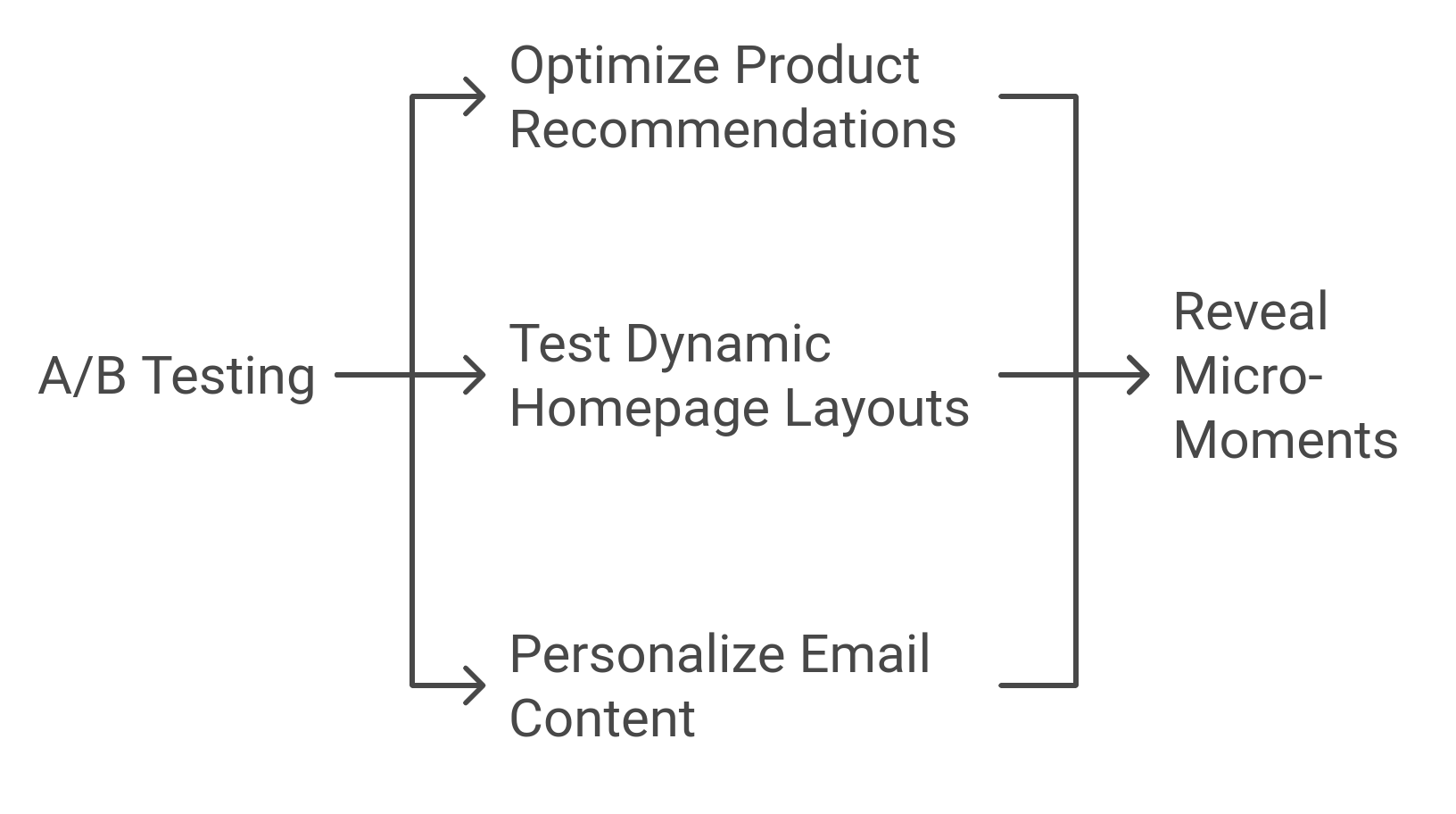
Optimizing Product Recommendations for New vs. Returning Users
New users often need guidance, while returning users crave familiarity. Businesses can determine whether first-time visitors prefer a curated list of trending products or a broader selection by conducting an A/B test on product recommendation algorithms. Conversely, returning users might respond better to personalized “based on your past purchases” suggestions.
Result: An A/B test can reveal which approach boosts conversions for each segment, ensuring data-driven personalization at scale.
Testing Dynamic Homepage Layouts Based on Audience Demographics
A homepage is often the first impression, but a boring and generic design doesn’t work for diverse audiences. A/B testing can compare layouts tailored to specific demographics such as displaying financial tools to professionals and showcasing student discounts.
Result: This ensures every visitor encounters a homepage that aligns with their priorities, improving engagement and reducing bounce rates.
Personalizing Email Subject Lines, CTAs, and Offers for Engagement Spikes
Email campaigns are powerful tools for re-engagement, but their success hinges on relevance. A/B testing allows businesses to experiment with subject lines (“Exclusive Offer for You” vs. “John, Here’s Your Deal”) and call-to-action phrases (“Shop Now” vs. “Discover More”) to identify what drives higher open and click-through rates.
Result: Insights from these tests can refine future campaigns, turning email communication into a highly personalized channel.
Revealing Micro-Moments That Matter to Users
Not all moments carry equal weight in the user journey. Some interactions, like deciding to add a product to the cart or signing up for a newsletter, can have outsized impacts. A/B testing spotlights these critical micro-moments, helping businesses identify where personalization matters most.
For instance, testing the timing of a personalized pop-up offer—after browsing for 30 seconds vs. exiting a page—can uncover when users are most receptive to engagement. Similarly, experimenting with personalized in-app notifications can pinpoint the precise triggers that drive clicks.
The Feedback Loop: A/B Testing as a Driver of Iterative Personalization
Personalization is an ongoing journey of refinement, and A/B testing plays a critical role here. It creates a feedback loop where every test provides insights that inform and elevate future strategies. This iterative approach transforms personalization into a dynamic and continuously improving process.
How Test Insights Inform Future Personalization Strategies
Each A/B test generates valuable data about user preferences and behaviors. These insights help businesses identify what works and doesn’t, guiding future personalization efforts. For example:
A test revealing that users prefer product recommendations based on browsing history can prompt the implementation of deeper behavioral tracking.
Similarly, identifying a high-performing CTA can inspire new ways to tailor calls to action across other touchpoints.
This feedback ensures that personalization strategies evolve with user expectations, driving meaningful engagement.
Leveraging A/B Test Results to Refine Machine Learning-Driven Recommendations
Machine learning helps create personalized experiences by analyzing user data, but without A/B testing, there's a risk that the system may not be fully accurate. A/B testing compares the AI-driven recommendations with simpler suggestions to see which one performs better. For example, comparing “people also bought” recommendations to those based on users’ interests helps identify the more effective approach. This process ensures that machine learning models are delivering valuable, accurate results for users.
The Cyclical Nature: Personalization Feeds A/B Testing, and Vice Versa
A symbiotic relationship exists between personalization and A/B testing. As personalization strategies mature, they provide richer data for testing, while A/B testing reveals insights that enhance personalization.
Personalization identifies what to test (e.g., which audience segments to target or features to customize).
A/B testing validates the effectiveness of these personalizations, ensuring continual improvement.
This cycle fosters a culture of experimentation and learning, helping businesses stay adaptive in a fast-evolving digital landscape.
Segmentation and Scalability: The Dual Role of A/B Testing in Personalization
As businesses scale, personalization becomes exponentially more complex. Delivering tailored experiences to millions without sacrificing precision is a formidable challenge—but one that A/B testing is uniquely suited to address.
How to Personalize Experiences for Millions Without Losing Precision
When managing large-scale personalization, A/B testing ensures that changes benefit the majority without alienating smaller segments. Advanced testing tools allow for simultaneous experiments across multiple variables, ensuring statistically significant data back personalization decisions. Example: A global e-commerce site can test region-specific pricing models or delivery options across millions of users without disrupting the broader user experience.
Segment-First A/B Testing: Crafting Unique Journeys for Niche Audiences
Segmentation is the backbone of personalization, and A/B testing refines this approach by providing granular insights. By focusing on specific user groups—like frequent travelers or tech-savvy millennials—A/B testing uncovers what drives engagement within each niche. Example: Testing targeted loyalty rewards for frequent travelers vs. cashback offers for millennials can highlight which incentive resonates most with each group.
Examples: Location-Based Personalization and Language Preferences
- Location-Based Personalization: Testing region-specific promotions (e.g., a winter sale in colder regions vs. summer discounts in warmer areas) ensures that users receive relevant offers.
- Language Preferences: A/B testing different translations or localized content for multilingual audiences reveals which version performs best regarding clarity and cultural resonance.
The Future of A/B Testing in Personalization: From Reactive to Proactive
As personalization evolves, so does the role of A/B testing. Traditionally, testing has focused on small, isolated changes—like button colors or headlines. The future, however, lies in moving beyond individual tweaks to optimize the entire user journey and leveraging advanced technologies like AI to unlock proactive personalization opportunities.
Moving Beyond Testing Single Changes to Optimizing End-to-End User Journeys
The next frontier for A/B testing involves evaluating how changes affect a user’s entire experience, from the first touchpoint to conversion.
- Example: Instead of just testing homepage layouts, businesses can experiment with integrated user flows, such as how a homepage redesign impacts navigation, product exploration, and checkout completion.
Benefits: This approach ensures that personalization strategies deliver cohesive and seamless experiences rather than fragmented improvements.
Predictive A/B Testing: Leveraging AI to Suggest Personalization Opportunities
AI enhances A/B testing by making it smarter and faster. Predictive A/B testing uses AI to:
- Identify opportunities for personalization based on user behavior patterns.
- Suggest the best variations to test before you even ask.
- Cut down on the time and effort needed to launch experiments.
For example, AI might recommend testing different in-app notifications for new users versus regular users, speeding up the process of finding the most effective approach.
The Evolving Role of A/B Testing in Real-Time Personalization
In an era of instant gratification, users expect real-time personalization. A/B testing adapts to meet this demand by enabling faster insights and immediate optimizations. Real-time testing platforms can now:
- Adjust experiences dynamically as user behavior unfolds.
- Continuously refine personalization strategies without waiting for test completion.
- Deliver results at the speed users expect, ensuring maximum relevance and engagement.
The combination of AI and real-time capabilities will push A/B testing from being a reactive tool to a proactive driver of innovation in personalization.
Measuring the ROI of A/B Testing in Personalization Efforts
Investments in personalization should yield tangible outcomes. A/B testing helps businesses quantify the impact of these efforts, proving their value while identifying areas for improvement.
Tangible Benefits
The most immediate ROI of A/B testing comes from key metrics:
- Improved Conversions: Testing optimized CTAs or personalized landing pages directly improves conversion rates.
- Retention: By tailoring experiences to user preferences, businesses can enhance loyalty and reduce churn.
- User Satisfaction: Personalization informed by testing creates resonating experiences, leading to higher satisfaction scores and positive feedback.
How A/B Testing Quantifies the Value of Personalization Investments
A/B testing translates personalization efforts into measurable outcomes. By comparing performance metrics between control and variation groups, businesses can confidently attribute increases in revenue or engagement to specific changes.
Example: Testing personalized product recommendations might reveal a 15% uplift in purchases, proving the value of investing in a recommendation engine.
Creating a Long-Term Personalization Strategy Rooted in Testing Insights
The data gathered from A/B tests doesn’t just inform immediate decisions—it builds the foundation for a sustainable personalization strategy. Insights from past experiments guide future initiatives, enabling businesses to:
- Develop a library of proven tactics for engaging different audience segments.
- Continuously refine their approach as user preferences evolve.
- Allocate resources effectively by focusing on high-impact personalization opportunities.
Conclusion
As businesses strive to meet user expectations, A/B testing emerges as the backbone of personalized experiences. It provides a structured, data-driven approach to effectively validating ideas, uncovering opportunities, and scaling personalization. From optimizing user journeys to leveraging AI for predictive insights, A/B testing ensures that personalization efforts are user-centric, measurable, and impactful. It transforms personalization from a creative exercise into a scientifically grounded strategy that drives results. The journey doesn’t end with a single test. By embracing A/B testing as an ongoing process, businesses can keep pace with changing user behaviors, experiment boldly, and adapt strategies to deliver exceptional experiences. Start using A/B testing as your ultimate tool for crafting data-driven personalization that meets and exceeds user expectations, turning visitors into loyal, delighted customers.


