

Introduction
Personalization has become a cornerstone of modern marketing, but many still wonder: what is personalization, and how can it be applied effectively? At its simplest, personalization means tailoring experiences to individuals rather than serving one-size-fits-all content. If you try to define personalization, it can be described as the practice of using customer data, behaviors, and preferences to deliver interactions that feel uniquely relevant to each user. This guide goes beyond the buzzword. We’ll explore the personalization definition and meaning, why it matters in today’s customer-first world, and how businesses can use it to improve engagement and conversions. From marketing personalization campaigns that adapt email content to web personalization engines that adjust site experiences in real time, personalization is no longer optional; it’s an essential strategy.
Whether you’re just beginning or looking to refine your approach, this blog will show you the steps, tools, and strategies to create personalized user experiences that drive real results.
What Types of Data are needed for Effective Personalization?
If you try to define personalization in practical terms, it begins and ends with data. The personalization meaning isn’t simply showing a customer their first name in an email; it’s about using the right information to deliver experiences that feel genuinely relevant. Without accurate, well-structured data, even the most advanced personalization engines or marketing platforms can miss the mark. To move beyond surface-level tactics, businesses need to understand the different types of data that fuel both marketing personalization and web personalization. These data sources form the backbone of personalized campaigns, ensuring that interactions are not just targeted but contextually meaningful.
The Three Main Types of Data You Need
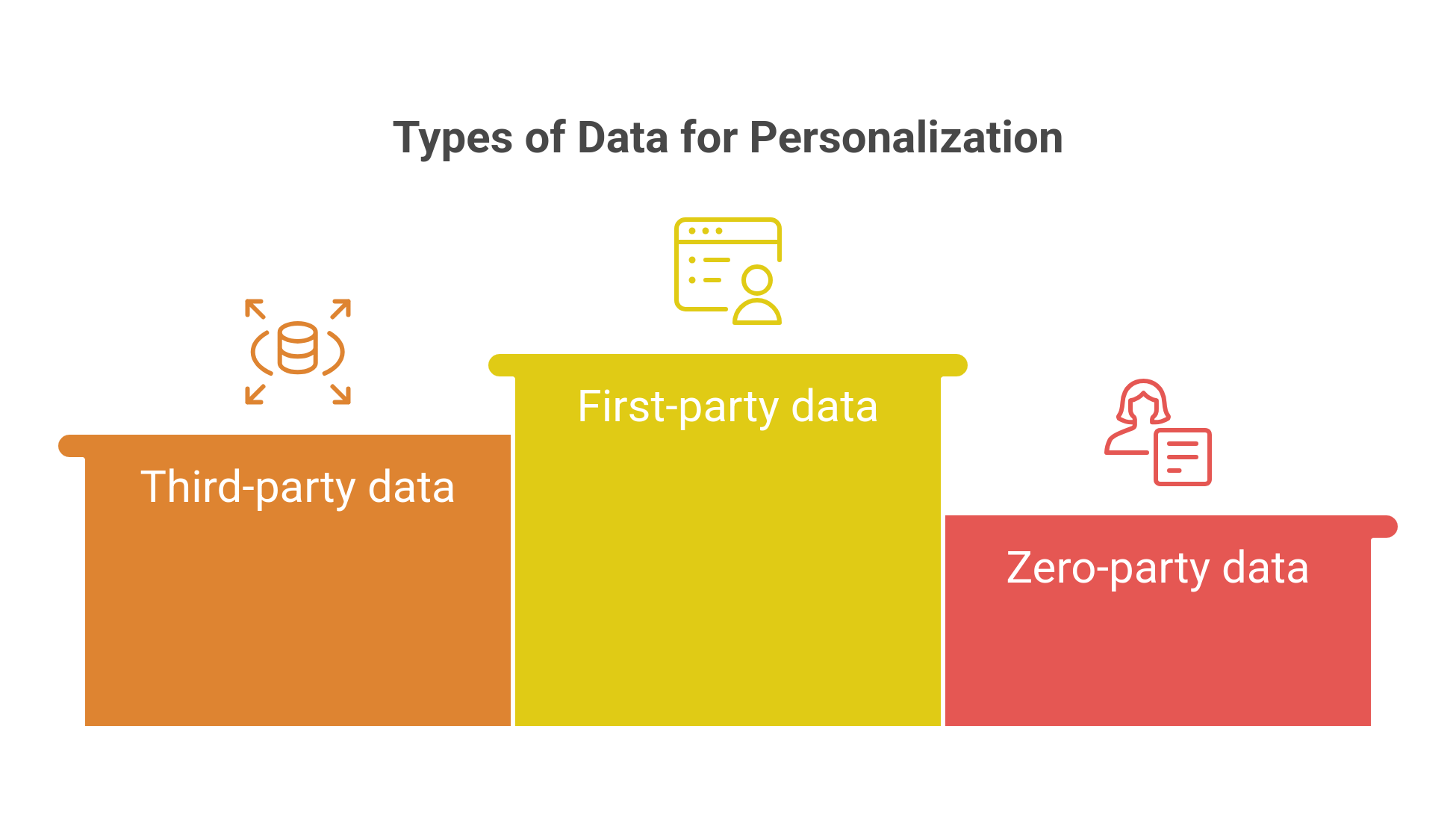
First-Party Data: This is data you collect directly from your customers through interactions with your brand. It includes:
- Website behavior (pages visited, time spent, content engagement)
- Email interactions (opens, clicks, replies)
- Purchase history and product preferences
- CRM data and customer support interactions
Since this data comes straight from your audience, it’s the most reliable and privacy-friendly, making it the foundation of any personalization strategy.
Zero-Party Data: Unlike first-party data, which you gather through behavior tracking, zero-party data is explicitly provided by users. This can include:
- Survey responses
- Preference centers (e.g., “Tell us what topics interest you”)
- Interactive quizzes
- Account settings and profile information
Zero-party data is powerful because it reflects direct customer intent. It removes the guesswork and ensures your personalization aligns with what users actually want.
Third-Party Data: This is data collected by external providers and aggregated from various sources, such as:
- Firmographic and demographic data from data vendors
- Behavioral data from ad networks
- Industry trends and market insights
With privacy regulations tightening, reliance on third-party data is decreasing, but it can still supplement first-party and zero-party data when used ethically.
Key Data Points for Effective Personalization
To move beyond surface-level personalization, focus on these critical data types:
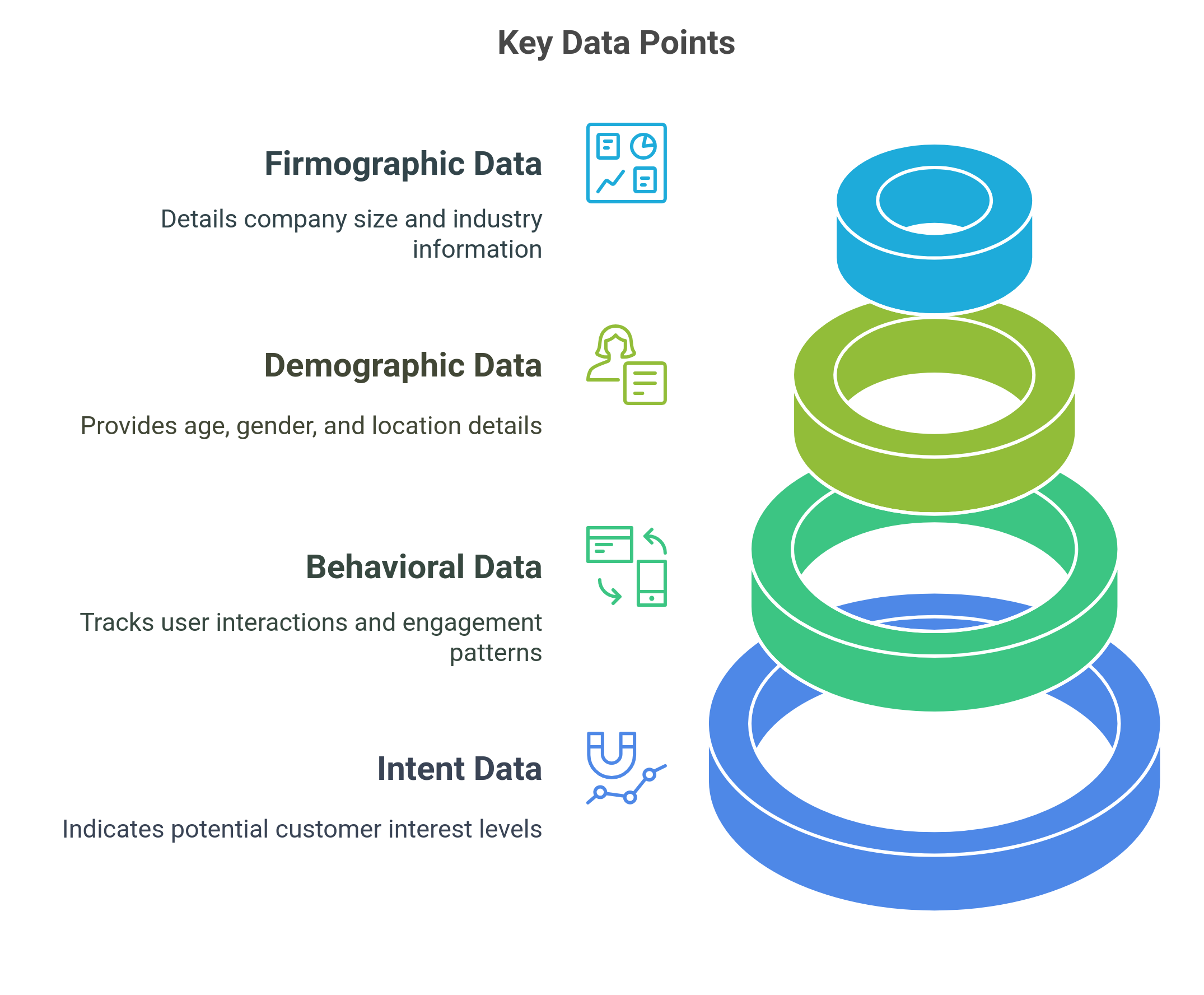
- Behavioral Data: Website visits, content consumption, past purchases, engagement patterns
- Demographic Data: Age, location, job title, industry
- Firmographic Data (B2B-Specific): Company size, revenue, industry, tech stack
Intent Data: Signals indicating buying intent, such as repeated visits to pricing pages or engagement with competitor comparisons
Best Practices for Data Collection, Accuracy, and Compliance
- Prioritize First-Party and Zero-Party Data: These sources are more reliable, consent-based, and privacy-compliant.
- Ensure Data Accuracy: Regularly clean and validate data to avoid outdated or incorrect personalization.
- Comply with Privacy Regulations: Adhere to GDPR, CCPA, and other data protection laws by being transparent about data usage and offering opt-ins.
- Integrate Data Across Systems: Ensure your CRM, marketing automation, and personalization platform work together to create a unified customer profile.
The success of your personalization strategy depends on how well you collect, manage, and apply data. With the right approach, you can move beyond generic experiences and create highly relevant interactions that feel truly personalized.
Why Data is the Heart of Personalization
The personalization definition may vary across industries, but one truth remains: effective personalization depends on accurate, timely, and ethically sourced data. Whether you’re building a marketing personalization campaign or deploying a personalization engine for your website, your success hinges on how well you collect, unify, and act on customer data. Done right, data transforms one-size-fits-all campaigns into tailored experiences that resonate deeply with each individual.
How to Define a Personalization Strategy that Aligns with Business Goals?
If you ask most marketers, “What is personalization?” the answer often stops at surface-level tactics like inserting a name in an email. But the true personalization definition goes deeper. It is not just a marketing add-on — it’s a strategic framework designed to strengthen customer relationships and drive measurable business outcomes.
When we define personalization as a business strategy, its meaning lies in aligning tailored experiences with organizational objectives while respecting data, resources, and technological maturity. Without this alignment, personalization risks becoming fragmented and ineffective. Here’s how to shape a strategy that works.
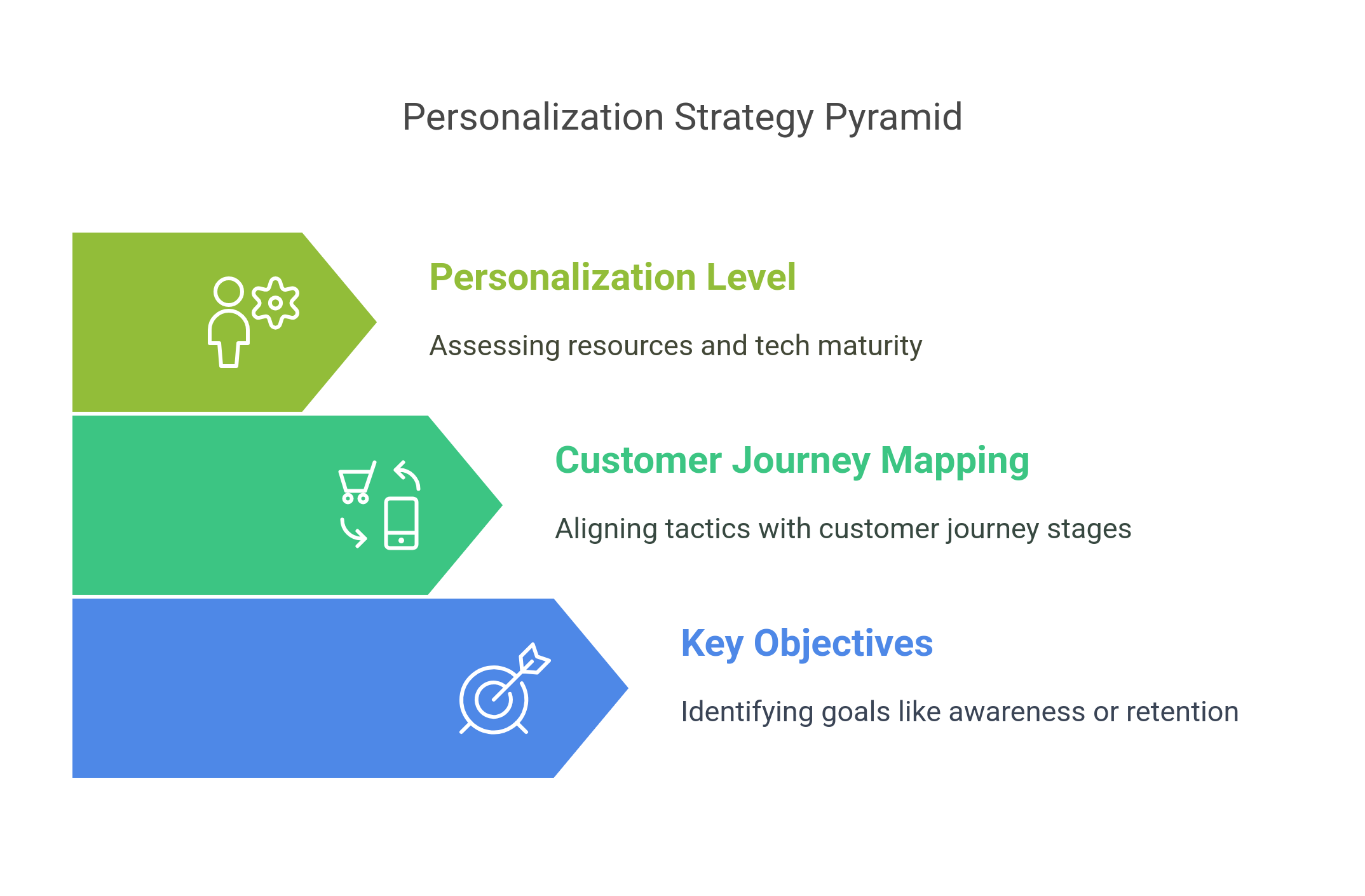
Step 1: Identifying Key Business Objectives for Personalization
Before diving into execution, it’s crucial to determine what you’re trying to achieve with personalization. Broadly, your objectives will likely fall into one or more of the following categories:
Building Brand Awareness: If your goal is to attract new visitors and introduce them to your brand, personalization should focus on making first impressions relevant and engaging. Strategies include:
Geo-targeted content: Adjust messaging based on a visitor’s location.
Personalized paid ads: Use data from previous interactions to serve highly relevant ad creatives.
Industry-specific messaging: Tailor website headlines, case studies, and social proof to fit different audience segments.
For example, a B2B SaaS company targeting both healthcare and finance professionals can dynamically update homepage content based on visitor industry data from tools like Clearbit.
Increasing Engagement: If you want visitors to interact more with your website, content, or emails, your personalization strategy should focus on:
AI-driven content recommendations: Suggest articles, videos, or guides based on past interactions.
Personalized email sequences: Triggered emails based on actions like visiting a product page but not converting.
Behavior-based chatbot interactions: AI-powered chatbots that offer relevant assistance based on user journey history.
For example, Netflix keeps users engaged by recommending content based on their viewing history. A similar approach can be applied in B2B marketing by recommending whitepapers or product demos based on previous engagements.
Driving Conversions: If your goal is to turn visitors into customers, personalization efforts should focus on nudging users toward a purchase or sign-up. Effective tactics include:
Personalized product recommendations: Suggest relevant products or solutions based on browsing history.
Dynamic pricing or offers: Provide discounts based on user behavior (e.g., returning users who abandoned checkout).
Intent-based CTAs: Change CTA messaging based on how far a prospect is in the funnel.
For instance, an e-commerce site might show a returning visitor a “Complete Your Purchase” message, while a first-time visitor sees an offer like “Get 10% Off Your First Order.”
Improving Retention and Customer Loyalty: Keeping customers engaged post-purchase is just as critical as acquiring them. Personalization for retention includes:
Onboarding tailored to user behavior: If a user signs up for a free trial but hasn’t used a key feature, send an email highlighting its benefits.
Predictive retention strategies: Identify signs of churn (e.g., declining engagement) and proactively offer support or incentives.
Loyalty rewards: Offer exclusive content, discounts, or VIP treatment based on past purchases or engagement levels.
For example, SaaS companies often use in-app messaging to guide users toward higher engagement and feature adoption, reducing churn.
Aligning Objectives with Measurable KPIs: Each personalization goal should be tied to clear KPIs. Here’s how objectives align with key metrics:

Once your objectives and KPIs are set, the next step is mapping personalization efforts to the customer journey.
Step 2: Mapping Personalization Tactics to the Customer Journey
Personalization works best when it aligns with how customers interact with your brand at different stages. Let’s break down the customer journey and the personalization tactics best suited for each phase.
Awareness Stage (First-Time Visitors & Early-Stage Prospects)
At this stage, users may have never heard of your brand. Your goal is to make a strong first impression and encourage further engagement. Best Personalization Tactics:
Dynamic landing pages that adapt based on referral sources or industry data.
AI-powered content recommendations that suggest relevant blog posts or case studies.
Personalized ads and retargeting that adjust messaging based on previous interactions.
Example: A visitor from a LinkedIn ad promoting a personalization webinar should land on a page with messaging that reinforces the value of that webinar, rather than a generic homepage.
Consideration Stage (Engaged Visitors & Returning Prospects)
Prospects in this stage are evaluating your offerings. Personalization should help them find the right solutions faster.
Best Personalization Tactics:
Behavior-based email sequences that trigger based on-site interactions.
Industry-specific product pages tailored to different verticals.
Chatbots that provide contextual responses based on browsing history.
Example: A B2B software company could personalize feature pages based on whether a visitor comes from a healthcare or financial services company, showing relevant case studies for each.
Decision Stage (Sales-Ready Prospects & Customers Close to Conversion)
At this point, users are ready to take action, so personalization should remove friction and encourage conversion. Best Personalization Tactics:
Dynamic CTAs based on user intent (e.g., ‘Start Free Trial’ for one visitor, ‘Request a Demo’ for another).
Personalized discount offers for returning visitors who haven’t converted.
Sales rep outreach with contextual data from past interactions.
Example: An e-commerce site could offer free shipping to a user who has abandoned their cart multiple times.
Retention & Loyalty (Existing Customers & Advocates)
For existing customers, personalization should drive ongoing engagement and brand loyalty, tactics:
Personalized onboarding and feature recommendations in SaaS platforms.
VIP or loyalty-based rewards for repeat customers.
Predictive churn prevention strategies using data-driven insights.
Example: A fitness app might suggest workout plans based on a user’s previous activities and goals.
Step 3: Determining the Right Level of Personalization
Not all businesses need AI-powered personalization from day one. The level of personalization you implement should align with your team’s capabilities, available data, and technological infrastructure.
Basic Personalization (Good for Beginners)
Manual audience segmentation
Basic email personalization (name, company, industry)
Website content changes based on UTM parameters
Intermediate Personalization (Requires Data Integration & Automation)
AI-driven recommendations
CRM and marketing automation sync for advanced segmentation
Dynamic content based on user behavior
Advanced Personalization (AI-Driven & Scalable)
Real-time personalization at scale
Omnichannel personalization across web, email, and ads
Predictive analytics for anticipating customer needs
What Tools and Technologies Are Essential for Personalization?
To truly bring the personalization definition to life, businesses need the right technology stack. While strategy outlines the why, tools and platforms power the how. A well-chosen set of technologies ensures that both marketing personalization and web personalization scale seamlessly across touchpoints, delivering consistent, data-driven experiences. At the center of this stack lies the personalization engine — the system that dynamically adapts experiences based on user data and behavior. Around it, supporting tools like Customer Data Platforms (CDPs), recommendation engines, and AI frameworks complete the ecosystem.
Here’s a breakdown of the essential technologies that define modern personalization.
Personalization Platforms: The Core of Your Strategy
Personalization platforms serve as the foundation for delivering dynamic, tailored experiences to your users. These platforms allow you to integrate data, create personalized content, and track user engagement all in one place.
What They Do:
Segment Users: Personalization platforms typically offer tools for segmenting users based on behavior, demographics, location, and other variables. This segmentation is crucial for delivering targeted experiences.
Deliver Content: Whether it’s through dynamic web content, personalized product recommendations, or tailored email campaigns, these platforms ensure content adapts to each user’s unique characteristics.
Track and Optimize: Continuous testing, analysis, and optimization of personalized content are vital. Platforms often include A/B testing, analytics, and performance tracking to assess effectiveness.
Popular Personalization Platforms: These platforms centralize personalization efforts, ensuring consistency and efficiency across marketing channels.
Fragmatic: A powerful personalization platform built specifically for B2B marketers, Fragmatic integrates seamlessly with a wide range of tools (like 6sense, HubSpot, Salesforce, and more), enabling effortless, flicker-free personalization on web properties. It stands out with its predictive heatmaps and AI-driven content recommendations based on data from over a million B2B websites. With its real-time insights, advanced segmentation, and A/B testing capabilities, Fragmatic empowers marketers to create tailored, engaging experiences that are both scalable and easy to manage. Its simplicity and speed make it ideal for marketers focused on enhancing conversion rates and user engagement, all while ensuring a smooth, intuitive experience.
Dynamic Yield: Known for its data-driven approach to personalization across web, mobile, and email channels.
Adobe Target: This tool offers advanced testing, targeting, and personalized content delivery.
Customer Data Platforms
A Customer Data Platform is an essential tool for any personalization strategy, as it collects and unifies customer data from all touchpoints into a single, actionable source. The CDP serves as the backbone for personalization by organizing and enriching data, which can be used to inform all customer interactions.
What They Do:
Centralize Data: CDPs bring together first-party data from web interactions, CRM systems, email engagement, and more. This creates a single, unified view of the customer.
Create Profiles and Segments: Using the data, CDPs allow marketers to create detailed customer profiles and segment users for targeted personalization.
Integrate with Other Tools: A CDP can seamlessly integrate with other marketing technologies, including personalization platforms, CRMs, and analytics tools, creating a unified ecosystem for marketing.
Popular CDPs:
Fragmatic: Fragmatic serves as both a CDP and a personalization platform, allowing marketers to unify data from various sources and use it for hyper-targeted web personalization. With its deep integration capabilities, Fragmatic can connect seamlessly to CRMs like Salesforce, along with other data tools, to build comprehensive customer profiles that power personalized content and experiences.
Segment: Allows for easy integration with other tools and provides real-time data on user interactions, enabling you to create personalized experiences.
BlueConic: This platform specializes in centralizing data across multiple systems and delivering actionable insights in real time.
Salesforce CDP: A great choice for companies already using Salesforce, this tool enables detailed customer profiles and real-time data analysis.
Recommendation Engines
Recommendation engines are one of the most powerful tools for personalizing product suggestions, content, and services on a large scale. They use algorithms to analyze past user behavior and preferences, providing tailored recommendations based on this data.
What They Do:
Analyze Behavior: These engines track user activity (clicks, views, purchases) and analyze it to predict future actions or preferences.
Deliver Dynamic Recommendations: Whether it's recommending products in e-commerce or articles in content-based websites, recommendation engines use data to make contextually relevant suggestions.
Increase Conversion: Personalized recommendations have been shown to drive higher engagement and conversion rates, as they make the user’s experience more relevant.
Popular Recommendation Engines:
Algolia: A search and discovery platform that uses machine learning to offer personalized recommendations based on customer behavior.
Dynamic Yield: In addition to personalization, Dynamic Yield offers robust recommendation engine capabilities.
Google Cloud AI: Provides tools for creating custom recommendation engines using machine learning models tailored to your unique data.
Artificial Intelligence and Machine Learning
AI and machine learning are at the heart of modern personalization strategies, offering capabilities that go far beyond traditional rules-based personalization. These technologies allow businesses to automate and optimize personalized experiences based on data insights, patterns, and predictive modeling.
What AI & ML Do for Personalization:
Predictive Personalization: AI models can predict what a user might want next, even before they explicitly show intent, making experiences more proactive.
Real-Time Adaptation: ML algorithms continuously learn from user data, adjusting content, recommendations, and messaging based on real-time behavior.
Natural Language Processing (NLP): AI-powered chatbots and virtual assistants use NLP to engage with users conversationally, providing personalized, relevant responses.
Popular AI & ML Tools for Personalization:
Google AI: Offers a suite of machine learning tools that can be used for personalized content delivery, predictive analytics, and deep insights.
IBM Watson: Provides machine learning models for analyzing user data and delivering real-time, hyper-personalized experiences.
Personyze: A tool that integrates AI and personalization, optimizing everything from site content to email campaigns based on user behavior and segmentation.
Fragmatic: Fragmatic uses AI and machine learning to power its predictive heatmaps and content recommendations, delivering personalized experiences that are both relevant and timely. With its real-time insights, Fragmatic adapts and optimizes user experiences continuously, ensuring engagement and conversions increase as user behavior evolves.
How to Segment Your Audience for Personalization?
Effective segmentation is the cornerstone of any successful personalization strategy. By dividing your audience into meaningful groups based on shared characteristics, you can deliver highly relevant and tailored experiences that resonate with each segment. Whether you’re targeting B2B or B2C audiences, segmentation allows you to move beyond generic messaging and engage users in a way that feels personal and valuable.
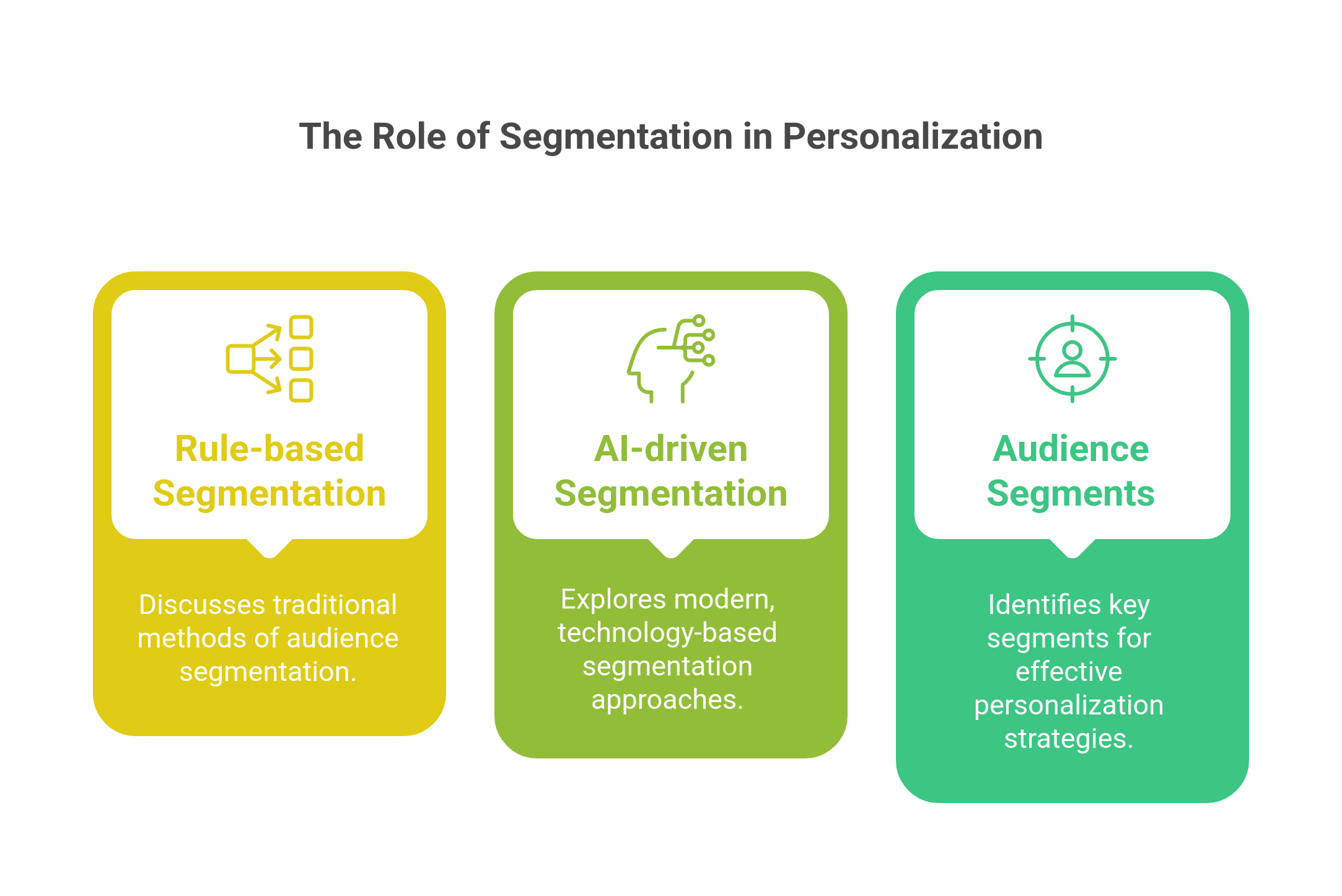
Role of Segmentation in Personalization Success
Segmentation enables marketers to create distinct, tailored experiences for different audience groups, making personalization more impactful. By understanding and grouping users based on their behavior, preferences, demographics, or intent, businesses can ensure they’re delivering content and messaging that aligns with each segment’s unique needs.
Targeted Messaging: Segmentation allows you to craft messages that are relevant and speak directly to each group’s interests or pain points.
Optimized Content Delivery: Tailor content and offers based on the behaviors and characteristics of each segment, ensuring that users receive the right message at the right time.
Increased Engagement and Conversions: Personalized experiences drive better engagement because they are more aligned with users’ needs, leading to higher conversion rates.
Rule-based vs. AI-driven Segmentation
When it comes to segmentation, you have two primary approaches: rule-based and AI-driven. Both have their strengths, but understanding the difference can help you decide which one is right for your needs.
Rule-based Segmentation: Rule-based segmentation divides audiences based on predefined rules or criteria such as demographics (age, location), behaviors (page visits, purchase history), or other attributes. Advantages:
Simple to implement and understand.
Ideal for clear, static data sets.
Easy to segment for specific campaigns or offers.
Limitations:
Static and limited by predefined rules.
Can miss nuanced insights and dynamic user behaviors.
AI-driven Segmentation: AI-driven segmentation uses machine learning algorithms to automatically identify patterns in user behavior and group customers accordingly. These segments evolve and improve over time based on new data. Advantages:
Can uncover hidden patterns and behaviors that rule-based methods might miss.
Dynamic and adaptive, meaning segments can change based on real-time data.
Scalable as the system learns and adjusts over time.
Limitations:
Requires more sophisticated tools and resources.
Can be more complex to implement initially.
While rule-based segmentation is great for straightforward campaigns, AI-driven segmentation provides deeper insights and more dynamic, actionable results that are better suited for sophisticated personalization strategies.
High-impact Audience Segments for B2B and B2C Personalization
Whether you’re marketing to businesses or consumers, effective segmentation helps target your audience more precisely, ensuring your efforts are relevant and resonant. Below are some high-impact audience segments that can drive personalized experiences for both B2B and B2C businesses:
B2B Segmentation
Firmographic Segments:
Characteristics: Industry, company size, revenue, location, etc.
Use Case: For B2B personalization, firmographics help tailor content and messaging based on the specific characteristics of a company or organization. For example, a healthcare company may need different messaging than a financial services firm.
Behavioral Segments:
Characteristics: Based on a company’s interactions with your website, products, and marketing materials (e.g., frequent visitors, demo requesters, or repeat downloads).
Use Case: Targeting users who have interacted with your brand in specific ways allows you to personalize content to nurture leads or guide them toward conversion. For instance, offering a whitepaper to those who have downloaded multiple product-related resources can deepen engagement.
Intent-based Segments:
Characteristics: Based on signals of intent, such as searching for keywords or viewing specific product pages.
Use Case: Segmenting based on intent helps create personalized experiences tailored to customers' immediate needs. For example, if a user repeatedly visits a product comparison page, you could serve them a tailored demo or product recommendation.
Lifecycle Segments:
Characteristics: The stage a company is in its lifecycle (e.g., lead, MQL, SQL, customer, or churned).
Use Case: B2B marketers often use lifecycle stages to personalize emails, content, and sales outreach efforts, with tailored messaging for each stage, such as onboarding content for new customers or retention strategies for at-risk accounts.
B2C Segmentation
Demographic Segments:
Characteristics: Age, gender, income, education, occupation, etc.
Use Case: Demographic segmentation is useful for targeting different consumer groups with personalized offers, content, and products. For example, a fashion retailer might create different marketing messages based on gender or income level.
Psychographic Segments:
Characteristics: Values, lifestyle, interests, personality traits, etc.
Use Case: Psychographic segmentation allows you to go beyond basic demographics and deliver messaging that speaks to a person’s values or interests. For instance, a health brand might focus on customers who value fitness and wellness.
Behavioral Segments:
Characteristics: Past behavior such as purchase history, browsing patterns, or brand interaction.
Use Case: Behavioral segmentation can drive personalized email campaigns, product recommendations, and promotions. For example, a customer who regularly buys running shoes could receive personalized offers for related products like sports apparel or accessories.
Geographic Segments:
Characteristics: Location-based targeting based on a consumer's region, city, or neighborhood.
Use Case: Targeting customers based on geographic location allows for location-specific offers or personalized experiences. For example, a retailer can show localized content or offers based on a user’s current weather or time of day.
By defining high-impact segments for both B2B and B2C personalization, businesses can ensure they’re providing the most relevant experiences that encourage engagement, loyalty, and conversions.
Best Practices for Audience Segmentation
Start with Clear Objectives: Determine what you aim to achieve with each segment (e.g., improving conversions, enhancing customer engagement, or boosting retention).
Use Data to Inform Segmentation: Leverage both quantitative and qualitative data to build meaningful segments. The more data you can use, the more refined your segments will be.
Test and Refine Segments Regularly: Segmentation is not a one-time task. As user behaviors and preferences change, so should your segments. Regularly analyze performance and optimize segments accordingly.
Personalize Across All Channels: Ensure your segments are actionable across all touchpoints (e.g., website, email, social media, etc.), delivering consistent, relevant experiences to each group.
What are the First Steps to Implement Personalization?
When businesses begin exploring what is personalization, it can feel overwhelming — the tools, the data, the strategies. But the truth is, you don’t need to start with a fully mature personalization engine or a complex AI system. The first steps toward personalization can be simple, practical, and highly effective. The key is to build momentum with tactics that are easy to execute, while gradually scaling toward advanced marketing personalization and web personalization strategies.
Here are the first steps to get started:
Start with Email Personalization
Email remains one of the easiest and most impactful entry points. Begin with basic personalization like adding the recipient’s name, tailoring subject lines, or referencing past interactions. Then, layer in behavior-based targeting:
- Simple Step: Use a customer’s name in the subject line or body copy.
- Next Level: Segment audiences by industry, interests, or past purchases, and send content tailored to their needs.
- Example: Instead of sending a generic “New Product Launch” email, create a version for healthcare professionals (“Discover How Our Tool Supports Healthcare Compliance”) and another for finance professionals (“See How We Simplify Financial Reporting”).
Why this matters: It makes your outreach feel relevant and immediately shows the personalization meaning in action.
Implement Dynamic CTAs (Calls-to-Action)
Your website is one of the most powerful places to showcase web personalization. Instead of static CTAs, use dynamic variations that change based on the visitor’s stage in the funnel, behavior, or profile data.
Example:
- A first-time visitor sees “Download Our Free Guide.”
- A returning visitor who’s viewed product pages sees “Request a Demo.”
- A customer sees “Explore Advanced Features.”
This approach ensures that each visitor receives a personalized user experience that meets them where they are, rather than offering generic prompts.
Use Product or Content Recommendations
Recommendation systems — often powered by personalization engines — are an accessible way to show users that their experience is tailored.
- For eCommerce: Suggest products based on browsing history, abandoned carts, or past purchases.
- For B2B Marketing: Recommend whitepapers, case studies, or upcoming webinars based on the visitor’s content interactions.
- Example: A visitor who downloads a guide on “Personalization in Marketing” could be shown a follow-up CTA offering a demo of a web personalization platform.
Even simple rule-based recommendations can significantly increase engagement and conversions before you move into AI-driven personalization.
Test, Learn, and Iterate
The personalization definition is not static — it evolves with your audience’s needs and behaviors. That’s why continuous testing is critical.
- A/B Testing: Compare personalized vs. non-personalized versions of CTAs, emails, or landing pages.
- Iterative Improvements: Use data to refine segments, messaging, and offers over time.
- Example: Test two email subject lines — “Hi [First Name], See Your Personalized Product Update” vs. “Your Weekly Insights Tailored for You” — and measure which drives higher open rates.
Testing ensures your personalization efforts stay relevant and effective, while preventing stagnation.
Personalize Website Content Based on Behavior and Intent
Your website is the hub of digital engagement, making it the most important place to demonstrate the personalization meaning in real time. Beyond simple CTAs, you can use web personalization tactics to adjust content dynamically as visitors browse.
Behavioral Targeting: Track user actions — pages viewed, time on page, scroll depth — to trigger personalized content.
Example: If a visitor spends time on a pricing page but doesn’t convert, serve them a pop-up offering a free consultation or a limited-time discount.
Intent-Based Targeting: Identify signals that indicate buying intent, such as multiple visits to comparison pages.
Example: A prospect who reads multiple case studies could be shown a CTA like “See How [Your Company] Helped [Customer Name] Achieve Results.”
These tactics ensure that each touchpoint feels relevant to the user’s journey, illustrating how a personalization engine can transform a static website into an adaptive experience.
Use A/B Testing to Optimize Early Personalization
The personalization definition isn’t “set it and forget it.” It’s about continuous refinement. A/B testing helps you evaluate which personalized elements resonate best.
- Examples of What to Test:
- Subject lines in marketing personalization emails (“Your Weekly Report” vs. “Your Personalized Weekly Report”).
- Personalized CTAs on a blog (“Learn More About Personalization” vs. “Request a Demo Tailored to You”).
Content placement on a homepage based on segment or industry.
Iterative Improvements: Use performance data to adjust messaging, timing, or offers. Over time, these small refinements compound into a powerful, data-driven personalization strategy.
- Examples of What to Test:
Why First Steps Matter
When businesses begin to define personalization in practice, it doesn’t require advanced AI or enterprise-level systems. The meaning of personalization lies in starting where you are, using simple yet impactful tactics — personalized emails, dynamic CTAs, tailored recommendations, and behavioral targeting — to build a foundation. As your data sophistication grows, these starter strategies can evolve into advanced marketing personalization and web personalization powered by AI and personalization engines. By starting small, testing continuously, and refining based on results, businesses can move quickly from theory to practice — and deliver customer experiences that feel genuinely personal from the very beginning.
How to Measure the Success of Personalization Efforts?
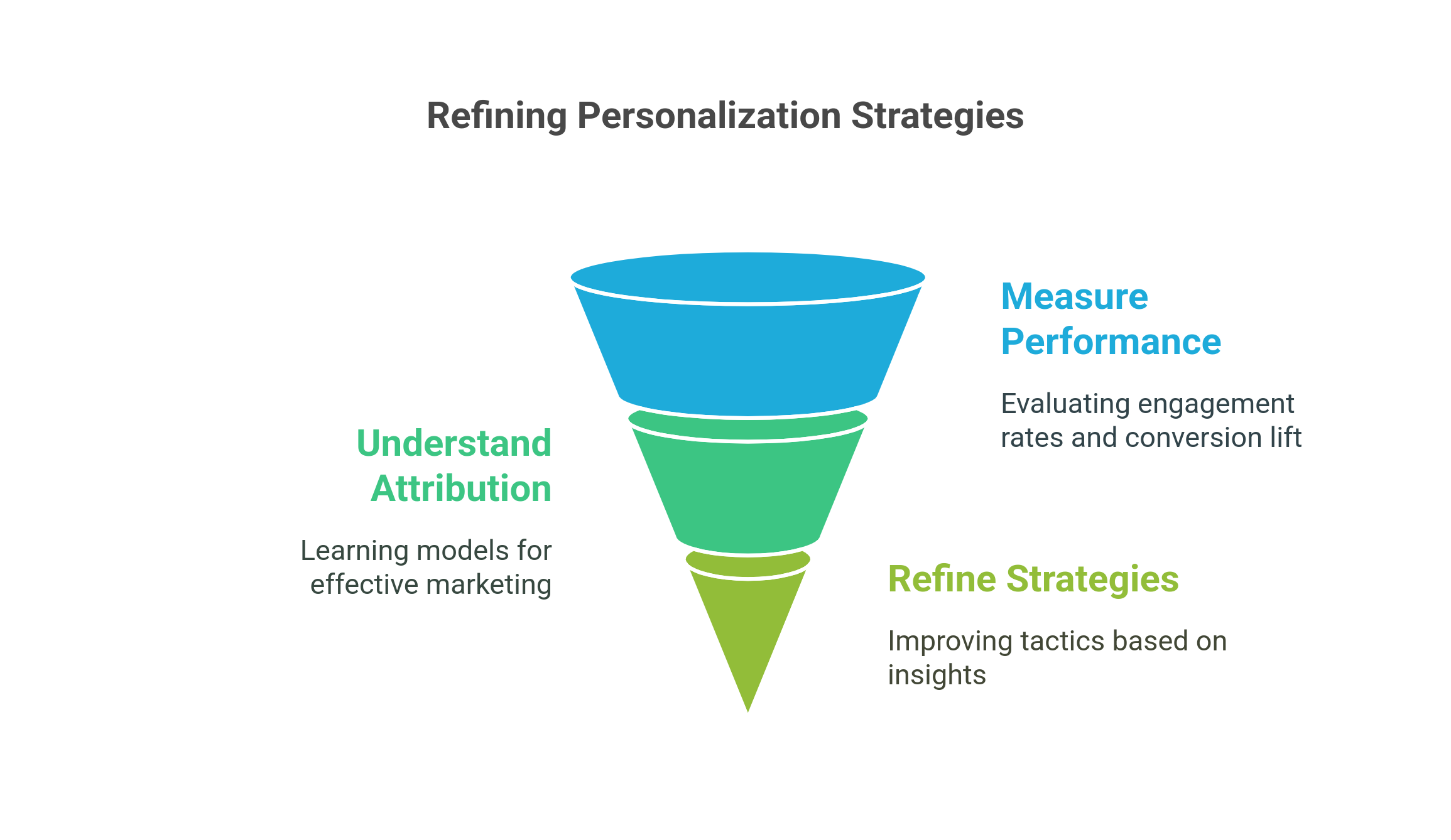
Effective personalization is all about delivering tailored experiences that drive tangible business results. However, without a clear framework for measuring success, it can be difficult to determine whether your personalization efforts are actually achieving your goals. In this section, we’ll explore how to track key performance metrics, understand attribution models, and leverage data insights to continually refine your strategy.
Key Performance Metrics
When measuring the success of your personalization efforts, it’s important to focus on both short-term and long-term metrics that reflect engagement, conversion, and overall revenue impact.
Engagement Rates: Engagement metrics are the first indicator of whether your personalized content is resonating with your audience. Engagement can be tracked through metrics like click-through rates (CTR), bounce rates, time on page, and social shares. High engagement typically signals that your personalized content is drawing the attention of users and prompting them to interact with your brand.
Example: A personalized email campaign with product recommendations that leads to a high CTR and longer time spent on the website indicates that users are finding the recommendations relevant.
Why It Works: Engagement metrics show how effectively you’re capturing and maintaining the attention of your audience, which is a key step in driving conversions.
Conversion Lift: Conversion lift refers to the increase in conversions—whether that's form submissions, purchases, or any other goal you’ve defined—resulting from your personalization efforts. This metric is often the most important when assessing the effectiveness of your personalization strategy because it directly ties to business outcomes.
Example: If you’ve personalized landing pages for different audience segments and see a higher conversion rate compared to the baseline (non-personalized), that’s a clear indicator that personalization is working.
Why It Works: Conversion rates are the ultimate measure of whether your personalization efforts are meeting business objectives. A conversion lift directly correlates to increased ROI.
Revenue Impact: Personalization’s ultimate goal is often to drive revenue growth, whether through increased sales, customer lifetime value, or repeat business. Tracking the revenue impact of your personalized initiatives helps you understand whether they’re generating the financial returns you're expecting.
Example: A personalized product recommendation engine that increases average order value or repeat purchases can provide a clear view of how personalization influences overall revenue.
Why It Works: Understanding the revenue impact ensures that your personalization efforts align with your business goals, validating the ROI and long-term sustainability of the strategy.
Understanding Attribution Models in Personalized Marketing
Attribution is the process of determining which touchpoints in the customer journey are responsible for driving conversions and other key actions. In personalized marketing, attribution can be more complex because it involves multiple interactions and channels, each playing a role in influencing the customer’s decision.
There are several attribution models you can use to understand how personalized interactions contribute to conversions:
- First-Touch Attribution: Credits the first interaction with the customer (e.g., a personalized email or ad) as the source of conversion. This model works well for businesses focusing on building awareness.
- Last-Touch Attribution: This model assigns all credit to the last interaction before conversion. It can be useful for measuring the final push toward conversion, but it may not account for earlier personalized touchpoints.
- Multi-Touch Attribution: Provides a more comprehensive view by assigning credit to all touchpoints that contributed to the conversion. This model is ideal for understanding how personalized interactions across the journey (e.g., email, website, social media) influence the final decision.
- Linear Attribution: This model distributes equal credit across all touchpoints in the customer journey, helping to assess the contribution of each personalized interaction.
- Time Decay Attribution: Attributes more credit to interactions closer to the conversion. This model works well when measuring the effectiveness of personalized tactics during the final stages of the customer journey.
Custom Attribution Models: Tailoring your attribution model based on your unique business needs can help you measure personalization success more accurately, particularly in B2B environments with longer, more complex buyer journeys.
Why It Works: Choosing the right attribution model allows you to more accurately track the impact of personalized marketing touchpoints. Understanding the value of each personalized interaction in the customer journey helps you optimize and allocate resources more effectively.
How to Use Data Insights to Refine and Improve Personalization Strategies
Once you’ve gathered data on the performance of your personalized efforts, it’s crucial to analyze those insights and use them to continuously improve your strategy. Personalization is not a one-and-done effort; it requires constant testing and iteration to meet the evolving needs of your audience.
Identifying Patterns and Trends: Data insights can help you identify patterns and trends in how your audience is engaging with personalized content. For example, are certain product recommendations driving more clicks in one segment than another? Are specific email subject lines resonating better with a particular demographic?
- Example: If users from a particular industry respond better to case study-driven CTAs rather than product demos, you can adjust your messaging to cater to that audience’s preference.
- Why It Works: Analyzing audience behavior allows you to tailor your personalization strategy based on real user needs and preferences, ensuring you remain relevant and effective.
A/B Testing and Experimentation: A/B testing remains one of the best ways to refine your personalization strategy. By continuously testing variations of personalized elements—like emails, landing pages, or CTAs—you can understand what works best and apply those insights to future efforts. Regularly conducting tests ensures you’re always learning and optimizing.
Continuous Monitoring and Adjustments: Personalization strategies need to evolve over time. As market conditions change, user preferences shift, or new technologies emerge, your personalization approach should adapt. Regularly monitoring your metrics, testing new tactics, and making adjustments based on data insights are critical to maintaining a successful personalization strategy.
Examples of Marketing and Web Personalization in Action
One of the best ways to understand the personalization meaning is to see how it works in practice. Beyond definitions and strategies, real-world applications show how businesses apply marketing personalization and web personalization to improve engagement, loyalty, and conversions. Below are examples that highlight how different brands — both B2B and B2C — bring the personalization definition to life.
Netflix: Web Personalization at Scale
Netflix is one of the most cited examples of web personalization. Its platform leverages recommendation algorithms — essentially acting as a powerful personalization engine — to suggest shows and movies based on each user’s viewing history, preferences, and even time of day.
- Tactics Used: Personalized homepage layouts, real-time recommendations, and tailored notifications.
- Why It Works: Users feel like Netflix “knows” them, reducing decision fatigue and increasing watch time.
Key Takeaway: Even in B2B, web personalization can mirror this approach by recommending relevant case studies, whitepapers, or demos based on browsing history.
HubSpot
HubSpot applies marketing personalization across email campaigns and on-site experiences. By tracking visitor behavior, HubSpot personalizes calls-to-action, email sequences, and content offers in real time.
- Tactics Used: Behavior-triggered emails, dynamic CTAs, AI-powered content recommendations.
- Why It Works: Content always feels timely and relevant to where the prospect is in the funnel — research, consideration, or decision.
- Key Takeaway: This shows that marketing personalization isn’t just about names in subject lines — it’s about aligning content with buyer intent.
Conclusion
Getting started with personalization is not about deploying the most advanced tools on day one — it’s about understanding the personalization definition and applying it in ways that align with your business goals. At its core, when you define personalization, it means creating experiences that are tailored to individual users rather than pushing generic, one-size-fits-all content. The true personalization meaning lies in delivering relevance, value, and timeliness at every touchpoint. From marketing personalization campaigns that adapt emails and ads, to web personalization powered by personalization engines that change website experiences in real time, the benefits are clear: higher engagement, stronger customer relationships, better conversions, and lasting loyalty. The journey begins with small, manageable steps — like personalized subject lines, dynamic CTAs, and simple content recommendations. Over time, these early tactics evolve into advanced personalization strategies that scale across channels. By measuring results, refining based on data, and continuously aligning with customer needs, personalization becomes more than a tactic — it becomes a growth engine.
In short, personalization is not a destination but a continuous practice. Businesses that embrace it today will not only answer the question “what is personalization?” but also master the art of creating meaningful, personalized user experiences that drive measurable business impact.


